First-Deposit Casino Bonuses in Australia: Legal Limits
 Available in AU

Table of content
Australian first-deposit offers must be assessed against the ban on online casino services, as well as payment, wagering and withdrawal conditions.
The First-Deposit Promise in an Australian Market That Forbids Online Casinos
A first-deposit bonus sounds like a simple exchange: an account is opened, money is deposited, and an offer is attached to that first payment. In Australia, however, the phrase sits inside a legal contradiction. The offer describes a familiar commercial arrangement, but real-money online casino games cannot lawfully be provided to people physically in the country.
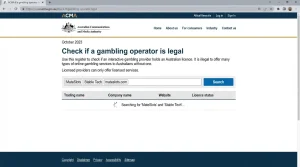
The governing law is the Interactive Gambling Act 2001. It prohibits operators from providing online casino games to people in Australia, including interactive pokies and online poker. The restriction applies whether the operator is based locally or overseas. A foreign address does not change the location of the person receiving the service.
That distinction matters. The law is directed at the provider, not at the individual who encounters an offshore casino online. Australian residents face no criminal or civil penalties simply for accessing, registering with or playing at one. The legal exposure described by the Act falls on entities offering prohibited services to people in Australia, rather than on customers for using them. The difference between those two positions is not a technical footnote; it is the central feature of the market.
A first-deposit bonus is only useful if its terms and deposit requirements suit your budget. Use this list as a starting point, and check each casino’s current bonus conditions before depositing.
1. SpinsUp
License: Curacao Gaming Control Board OGL/2023/174/0082 (Dama N.V.) SpinsUp is listed with a Curacao Gaming Control Board licence, OGL/2023/174/0082, held by Dama N.V.
2. LevelUp Casino
License: Curacao eGaming OGL/2023/174/0082 (Dama N.V.) · Min. deposit: A$15 LevelUp Casino lists a minimum deposit of A$15 and a Curacao eGaming licence, OGL/2023/174/0082, held by Dama N.V.
3. MrPacho
Payout speed: crypto 30-120 minutes, fiat 24-72 hours · Min. deposit: A$30 MrPacho lists a minimum deposit of A$30. Its stated payout times are 30–120 minutes for crypto and 24–72 hours for fiat.
4. Ricky Casino
Payout speed: crypto under 1 hour, PayID 1-3 business days · Min. deposit: A$20 (A$30 to qualify for the bonus) Ricky Casino lists a A$20 minimum deposit, with A$30 required to qualify for the bonus. Its stated payout times are under an hour for crypto and 1–3 business days for PayID.
5. SkyCrown
License: Tobique Gaming Commission · Payout speed: crypto ~10-15 minutes, fiat 1-5 days · Min. deposit: A$30 SkyCrown lists a Tobique Gaming Commission licence and a minimum deposit of A$30. Its stated payout times are around 10–15 minutes for crypto and 1–5 days for fiat.
6. Kingmaker
Payout speed: crypto ~90 minutes, fiat 1-5 days · Min. deposit: A$30 Kingmaker lists a minimum deposit of A$30. Its stated payout times are around 90 minutes for crypto and 1–5 days for fiat.
7. Neospin
License: Curacao Gaming Control Board OGL/2023/176/0095 (Hollycorn N.V.) Neospin is listed with a Curacao Gaming Control Board licence, OGL/2023/176/0095, held by Hollycorn N.V.
8. GoldenCrown
License: Curacao Gaming Control Board OGL/2023/176/0095 (Hollycorn N.V.) GoldenCrown is listed with a Curacao Gaming Control Board licence, OGL/2023/176/0095, held by Hollycorn N.V.
9. Thor Casino
License: Curacao – Antillephone N.V. (Versus Odds B.V.) · Min. deposit: EUR 20 Thor Casino is listed with a Curacao licence from Antillephone N.V. (Versus Odds B.V.) and a minimum deposit of EUR 20.
10. Wild Tokyo
License: Curacao · Payout speed: crypto 30-60 minutes, fiat 1-5 days · Min. deposit: A$10 Wild Tokyo lists a Curacao licence and a minimum deposit of A$10. Its stated payout times are 30–60 minutes for crypto and 1–5 days for fiat.
A bonus, meanwhile, is part of the offer made by an operator. A first-deposit promotion is tied to an initial payment. A no-deposit offer is different in kind: it may provide free cash or free spins when an account is created without a deposit. The names can look close on a promotional page, but the underlying trigger is not the same. One begins with a payment; the other is presented without one.
That makes “first deposit” a particularly loaded promise in Australia. The words suggest a normal welcome arrangement, one offered in a lawful retail setting where the service itself is permitted. Here, the service described by the promotion is prohibited when offered to people physically in the country. An appealing label cannot make the underlying arrangement lawful. Nor does the fact that a person is not penalised for playing turn the operator’s offer into a permitted local product.
The point is easy to blur because the language of bonuses is designed to make the transaction feel ordinary. “Welcome” sounds hospitable; “first deposit” sounds like a small ceremony marking a new account. But hospitality is not the legal question. The relevant question is whether an entity is providing real-money online casino games to someone in Australia. Under the Act, that is prohibited.
This also explains why a first-deposit casino bonus should not be treated as interchangeable with a no-deposit chip. The latter label describes an offer that does not begin with a payment; the former describes one that does. That difference can matter to a reader trying to understand what a promotion claims to require, but neither label alters the legal status of the service. A free offer is not made lawful merely by requiring no initial payment, and a deposit-based offer is not made lawful by calling it a welcome reward.
The broader social arrangement is unusual. Australian law draws a firm line around the businesses that may provide online casino games, while not making the resident who plays the target of criminal or civil penalties. It is a boundary aimed at supply rather than personal conduct. That does not amount to official approval, consumer protection, or recognition of an offshore casino as a lawful Australian service. It simply identifies where the Act places its prohibition.
The word “best” therefore carries less practical certainty than it might in a lawful casino market. A promotional headline can make a promise look settled before the conditions, the operator’s status and the legal setting have even been considered. In Australia, the first question is not whether an offer sounds generous. It is what kind of service is being offered, and whether it may lawfully be offered to someone in the country.
A label is not a licence.
Online and Mobile Offers: The Payment Detail That Matters
A payment method can look simple at the deposit stage and become more complicated when money is meant to travel back. That difference matters more than whether an offer appears on a desktop page or a phone screen. PayID is described as a way to send a deposit through an email address or mobile number, with transfers settling in seconds rather than requiring BSB and account digits as the addressing details. At Australian banks, deposits by PayID are described as instant and free.
PayID Transfers
At Australian banks, deposits made via PayID are described as instant and free.
The convenience is specific: it concerns the incoming transfer. It should not be read as a promise that every part of the payment journey works in the same way. In particular, the route used to fund an account may differ from the route used to return funds. For deposits, the account holder can direct a PayID transfer using an identifier already familiar from ordinary banking. For withdrawals, most offshore casinos aimed at Australian customers are described as using bank transfer instead. Money going in and money coming out are not mirror images.
That distinction is easy to overlook when a casino presents the cashier as one compact panel. A screen gives deposits and withdrawals the same visual status: two buttons, two directions, one balance. Behind them, the underlying processes may be different. PayID’s described speed applies to the transfer into the account, while the outward payment is described as a bank transfer.
Mobile access can make the cashier feel close at hand, but the payment detail remains a banking question rather than a special kind of bonus. A phone number may serve as the PayID identifier; that does not make a mobile casino offer a separate payment product. Nor does the presence of a mobile interface change the difference between an incoming PayID payment and an outgoing bank transfer. The device is the window. The payment rails do the work.
There is a further wrinkle for some no-deposit winnings. A specialist review reports that an operator may require a PayID deposit before allowing those winnings to be withdrawn, with the payment used to connect the bank account. This is a condition described by that review, not a rule that can be assumed to apply everywhere. Rather, a balance that began without a deposit may still encounter a deposit-related step at the withdrawal stage.
That condition changes the meaning of “no deposit” in a practical, if narrow, way. It can describe how an offer begins without describing every later requirement attached to receiving funds. A deposit used to establish a payment link is not the same thing as a first deposit made to qualify for a welcome promotion. The labels can sit close together on a cashier page, while their purposes differ. One concerns entry into an offer; the other, in the review’s account, concerns linking a bank account before a withdrawal.
The old banking details have not vanished from the story; they have simply moved to another part of it. PayID avoids entering BSB and account digits when directing the described deposit, but bank transfer remains the stated withdrawal method at most offshore casinos serving the Australian market. A fast outward payment cannot be inferred from a fast inward one, and an easy identifier does not settle what conditions an operator may attach to a withdrawal.
Attention: The route used to fund an account may differ from the route used to return funds, and some operators may require a deposit to link a bank account before withdrawing no-deposit winnings.
Payment language often turns a chain of separate steps into a reassuring shorthand: instant, free, direct. Here, those descriptions belong to the deposit side and to the Australian banks handling PayID. The return journey is different, and a specialist review describes a possible account-linking deposit before no-deposit winnings can be released. In a mobile setting, the interface may compress those steps into a few taps. The distinction remains. A convenient entrance is not the same as an uncomplicated exit.
Bonus Mechanics: When an Offer Is Not Really a First-Deposit Deal
A no-deposit offer has a particular meaning: an account is opened and the bonus is made available without a payment being made first. It may take the form of free cash or free spins. That makes it different from a first-deposit bonus, which depends on a deposit to trigger the offer. The two labels can sit close together in promotional language, but their conditions describe different starting points.
$100 No-Deposit Bonus Casinos in Australia
The distinction is easy to blur because both offers may be presented as a welcome. In one case, the account itself is the threshold; in the other, the first payment is. A bonus described as “free” does not necessarily belong to the first category. The useful test is not the size of the offer or the warmth of its wording, but whether a deposit is required before it becomes active.
Activation can also involve a small administrative ritual. A specialist casino review describes offers that are credited automatically, while others require a bonus code entered during registration or in the cashier. These are not interchangeable steps: an automatic credit depends on the offer being recognised by the system, whereas a code makes the player’s selection explicit. A code entered in the wrong place, or not entered at all, may leave the advertised offer unclaimed. The promotional language is brief; the process can be less so.
A further complication is the offer that calls itself no-deposit while attaching a payment condition. One specialist casino review describes listed promotions requiring a minimum deposit of AU$5 to activate. That is not a no-deposit bonus in the ordinary sense of receiving an offer after opening an account without paying. It is a small-deposit offer, however modest the threshold may be. The label and the trigger are telling different stories.
This matters because a first payment is not merely a technical detail. It changes what the offer asks of a person before any bonus appears in the account. A genuine no-deposit offer places the initial emphasis on registration; a first-deposit promotion asks for money first. A small required payment remains a payment, not a grammatical footnote.
The mechanics are therefore worth reading as a sequence: what action opens the account, what action activates the bonus, and whether a code is part of that sequence. If the terms say that a code must be entered, the offer is not necessarily automatic. If activation depends on a deposit, the promotion is not genuinely deposit-free, even when its headline suggests otherwise. That is the basic distinction behind casino first-deposit bonuses and offers that merely borrow the language of a free welcome.
The awkwardness is revealing. “Welcome” describes a mood; “no deposit” describes a condition. Promotional copy often gives the first word more room than the second. Yet the mechanics determine which kind of offer is actually being made: account-led, payment-led, or code-led. No mystery there—only small print doing its usual work.
Do
- Check if a deposit is required for activation
- Verify if a specific bonus code is needed
- Confirm the offer is automatically credited
Don’t
- Assume “welcome” means the bonus is free
- Ignore the requirement for a minimum deposit
- Expect an automatic credit without checking terms
Slots, Eligible Games and the Fine Print Around Play
A bonus balance can look like a single pot of money, but the games attached to it may be treated very differently. For anyone comparing a first-deposit offer with other promotions, the word “eligible” matters as much as the headline amount: a game can be available to play without contributing meaningfully to the wagering requirement.
In the documented terms for no-deposit offers, pokies generally count at their full contribution rate. Blackjack, baccarat and roulette, by contrast, are commonly assigned a contribution somewhere between zero and ten per cent. That difference changes how quickly play on each game advances the wagering requirement. A table-game round may move the balance very little, or not at all, even while a pokie spin counts in full.
The distinction reflects an old division in casino accounting. Games with different rules and house edges have long been separated in promotional terms, and bonuses make that separation visible: the operator defines which play counts, and by how much. The promotional balance is therefore not simply cash with a new label. Its practical value depends on the permitted games and their contribution rates.
A “best” offer for pokie play is not automatically best for someone who prefers table games. Nor does a list of available titles establish that every title qualifies. The terms may name eligible categories, exclude particular games, or assign a lower contribution to a category. Checking the game-specific rules is more useful than relying on a broad description such as “casino games included.”
The exclusions behind the game lobby
Progressive jackpots, table games and live dealer titles are commonly excluded from no-deposit offers. The lobby can still display them alongside eligible games, which makes the distinction easy to miss. Availability is not permission to use bonus funds there. A title’s presence on the site does not settle whether its play qualifies under a promotion.
That matters particularly for progressive jackpots. A game may appear to be an ordinary pokie while carrying a jackpot feature that places it outside the promotion’s eligible group. Where terms exclude progressive jackpots, the label is not decorative. Playing an excluded title can put the bonus balance at risk.
The same caution applies to live dealer games. A roulette or blackjack table may be open for play, but table games and live dealer titles are among the stated exclusions in no-deposit terms. Even where a table game is not excluded outright, its contribution may be far below that of pokies. The game category and its contribution rate are separate questions.
Spins and chips are not interchangeable
A specialist review describes free spins as being tied to a particular pokie, while free-chip bonuses may be limited to selected slots. That is a description of particular offer mechanics, not a guarantee that every promotion follows the same pattern. The named game and the eligible-game list determine where the bonus can be used.
This distinction can be obscured by promotional language. “Free spins” sounds flexible until the terms attach them to one title; “free chip” sounds broadly usable until the eligible games narrow the choice. In either case, the offer’s label cannot replace its conditions.
Pokies
Generally count at their full contribution rate toward wagering requirements.
Table Games
Blackjack, baccarat, and roulette commonly contribute between zero and ten per cent.
Excluded Games
Progressive jackpots, live dealer titles, and specific table games are often excluded.
The useful comparison, then, is not simply between a first-deposit bonus with more spins and one with fewer. It is between the actual games allowed, the contribution each game receives, and any stated exclusions. A large game library is no assurance that bonus play can use all of it. The fine print decides.
Wagering Requirements: The Arithmetic Before Withdrawal
A wagering requirement turns a bonus figure into a target for bets. The multiplier is applied to the amount specified in the offer terms—often the bonus itself, though the wording must be checked. A bonus that looks substantial on the screen can therefore represent a much larger amount of play before its winnings become eligible for withdrawal.
The arithmetic is straightforward when the terms say the requirement applies to the bonus amount. A A$10 bonus with a 40× requirement means A$10 multiplied by 40: A$400 in total wagers. At 50×, the same bonus requires A$500 in bets. These are not amounts to deposit or winnings to collect; they are the cumulative stakes needed to satisfy the stated condition.
The multiplier changes the scale of the task. It does not tell the whole story: game contribution rates can affect how quickly the required wagering is counted, and the offer’s terms determine which bets qualify. A figure on a promotion page is only meaningful alongside its calculation base and the rules for eligible play.
Why published ranges differ
The figures reported for no-deposit offers are not uniform. One specialist review describes wagering requirements in the AU-facing market as ranging from 40× to 60×. A separate specialist review gives a broader range, from 40× to 70×. Those are descriptions from individual reviews, not a single settled market standard. The upper end matters: using the lower figure as a general assumption can leave the actual target understated.
New Online Casinos with No-Deposit Bonuses
There is a further distinction between a multiplier on the bonus and one applied to the bonus plus a deposit, or to another amount defined by the promotion. The examples above use the bonus amount as the base. If an offer uses different wording, the total cannot be worked out from the multiplier alone. Terms that state the base clearly are more useful than a large headline figure.
A no-wagering label has a plain mathematical appeal: without a wagering multiple, there is no multiplier-based betting target to calculate. But that phrase alone does not establish that every other condition is absent. The relevant comparison is the written condition attached to the bonus, not the neatness of its advertising.
For an offer with a wagering requirement, the practical question is not merely whether the multiplier looks low or high. It is what amount it multiplies, how eligible bets count, and whether the resulting total is plausible for the bonus being offered. A modest bonus can demand hundreds of dollars in turnover; a higher multiple increases that burden in direct proportion.
The arithmetic is simple. The terms rarely are.
Wagering Calculation
Step 1: Identify the Bonus
Determine the bonus amount, for example, A$10.
Step 2: Check the Multiplier
Locate the wagering requirement, such as 40× or 50×.
Step 3: Calculate Total Wagers
Multiply the bonus by the requirement (e.g., A$10 × 40 = A$400) to find the total stakes needed.
Free Spins Have Their Own Clock
A free-spin offer can look simple because it arrives as a count of plays rather than a balance of cash. Its practical value, however, depends on a deadline that may be shorter than the time needed to notice the offer, verify an account and understand its conditions. A specialist review reports that free spins attached to no-deposit offers expire after 72 hours. That is a reported term, not a standing rule for every promotion; the offer’s own conditions set the clock.
The distinction matters when comparing spins with no-deposit cash. The same specialist review describes a seven-day validity period for most no-deposit cash bonuses, but reports a shorter window for spins. A single label—“no deposit”—therefore does not tell the whole story. The format of the reward can change how quickly it must be used.
There may be a second deadline before the spins become available. A specialist review reports that a no-deposit bonus can require email verification, with the verification link needing to be used within 24 hours. This is a condition reported for an offer, not a universal Australian-market practice. Where verification is required, the activation link and the expiry of the spins are separate clocks: one concerns confirming the account, the other concerns using the promotion.
That separation can make the timing less obvious than a countdown displayed beside the offer. An account may still exist after a verification link expires, while the bonus itself may have its own validity terms. Conversely, completing verification does not extend a promotion unless its stated conditions say so. The date and time attached to each step matter more than the broad phrase “free spins.”
No-deposit casino bonuses in Australia: how they work
This is especially relevant to the phrase “first-deposit free spins.” It can suggest that a deposit triggers the reward, while a no-deposit offer is framed around account creation without a payment. The labels are not interchangeable, and neither label settles the deadline. The conditions attached to the particular offer determine whether verification is needed and when the spins expire.
For people in Australia, this sits within a legally restricted market. The Interactive Gambling Act 2001 makes it illegal for operators to provide real-money online casino games to people physically in Australia. The offer language found on offshore services does not alter that legal position.
A short expiry period also changes the character of the reward. Free spins are not simply a small present waiting indefinitely in an account; they are a time-limited promotion, with verification potentially preceding use. The clock is part of the offer.
A Casino Bonus Is Only Useful If the Balance Can Be Withdrawn
A bonus balance can look substantial on a screen and still fail to become money that can leave an account. Before withdrawal, no-deposit winnings may be subject to both wagering conditions and identity verification. Those are separate gates: completing play requirements does not, by itself, settle the question of who owns the account or whether a payment can be processed.
Verification can involve confirming account details and responding to an email link. A specialist review describes a 24-hour window for completing email verification, but that deadline should be treated as a term of the particular offer it discusses, not a standing rule across the market. The practical point is less dramatic and more useful: an unverified account may not be able to withdraw, even when a displayed balance appears ready.
Legal Risk
The Interactive Gambling Act 2001 prohibits operators from providing real-money online casino games to people in Australia.
Then comes the withdrawal threshold. A specialist review reports minimum withdrawal requirements of A$25 to A$100 at many offshore casinos facing Australian customers. A balance below the applicable minimum may therefore be stranded: not necessarily erased, but unavailable through a withdrawal request unless it reaches the stated threshold. A small bonus can be especially vulnerable to this arithmetic, because the amount on screen is not the same thing as an amount eligible to leave.
There is a wider complication. The Interactive Gambling Act 2001 prohibits operators from providing real-money online casino games to people in Australia. The law targets providers rather than imposing criminal or civil penalties on players, but that distinction does not create Australian consumer protections for an account held offshore. If a withdrawal is refused or a balance disputed, there is no local casino-licensing framework to rely on.
That is a poor setting for treating a promotional balance as dependable income. The final check is not merely whether a bonus can be claimed, but whether its terms permit withdrawal, what verification is required, and whether the resulting balance clears the minimum threshold. A bonus that cannot pass those tests is only a number on a screen.
The distinction is blunt.
Promotions, Maximum Bets and the Risk of Losing the Bonus
A promotion is not simply a sum added to an account. Its terms can make the balance conditional: wagering requirements, game restrictions, expiry periods and a maximum cashout cap may all apply. A separate operational condition can matter just as much. The permitted stake while using bonus funds may be limited, and exceeding that limit can void the bonus.
MateSlots Bonus Codes Australia: Welcome Package & Promos
A specialist review reports maximum-bet limits in the A$5 to A$6.50 range for the offers it examined. That is a report about particular terms, not a dependable rule for every promotion. The controlling figure is the one stated in the specific offer’s conditions, which may set a different limit or define exactly when it applies. The distinction is consequential: a stake that seems ordinary in a cash game can breach a bonus condition.
The consequence may extend beyond the promotional credit. Where the terms say that exceeding the maximum bet voids the bonus, winnings attached to it may also be affected. A single breach can therefore alter the status of the whole balance rather than merely disqualifying one wager. Fine print has a long memory.
This is why first-deposit casino promotions should not be treated as interchangeable with no-deposit offers—or as a single, standard product. The conditions attached to one promotion do not establish the rules for another. A headline offer can foreground the amount while leaving the operative restrictions in the terms; the stake limit is one of the details that can decide whether the promotion remains valid.
There is also a broader Australian context. Real-money online casino services are prohibited for operators serving people in Australia, and offshore access carries no Australian consumer protection. A promotion’s terms do not change that legal position. In a market where such services are prohibited, reading a bonus condition is not the same as receiving a local safeguard.
Max Bet Limit
Exceeding the permitted stake limit while using bonus funds—often in the A$5 to A$6.50 range—can void the bonus and associated winnings.
Welcome Bonus or No-Deposit Offer? Read the Label Carefully
A first-deposit welcome bonus and a no-deposit offer describe different bargains. The first is tied to putting money into an account; the second is presented without a deposit. The distinction matters because figures attached to one type cannot be transferred to the other by changing the label.
The terms at issue here concern no-deposit offers, not a confirmed first-deposit welcome bonus. Their headline amount is only part of the arrangement. A cashout cap can limit how much of the bonus-derived winnings may be withdrawn, even if the balance displayed during play is higher. In the AU-facing market, no-deposit offers are reported with maximum cashout caps in the A$50–A$200 range. That is a ceiling on eligible winnings, not a promise that the full amount will become payable.
The cap is easy to miss beside a large promotional figure. It is also easy to confuse with a limit on the original bonus: the relevant question is what the terms allow to be cashed out from winnings, not merely what appears in the account. A welcome offer may have its own conditions, but a no-deposit cap says nothing reliable about those conditions.
Validity adds another layer. A specialist review describes a seven-day validity period for most no-deposit cash bonuses. That is a report about a changing set of offers, not a standing rule for every casino or a term that can be assumed for a first-deposit promotion. The expiry date belongs to the specific offer and its terms. A label alone cannot establish it.
The practical reading is therefore narrow: identify whether the offer is deposit-based or no-deposit, then check the cashout ceiling and the stated validity period for that exact promotion. A no-deposit cap should not be presented as the cashout limit of a welcome bonus, and a reported validity window should not be treated as universal.
Promotional language likes a large number in the foreground. The conditions tend to sit behind it.
High-Roller Casino Bonuses in Australia: Terms
Real-Money Winnings and the Limits on Cashing Out
A bonus balance is not the same thing as money ready to leave an account. With a no-deposit offer, winnings can remain subject to a cashout ceiling even after the wagering requirement has been met. The amount displayed during play may therefore be larger than the sum an operator will release.
For no-deposit bonuses, the documented cap commonly falls between A$50 and A$100. That limit changes the meaning of a successful run: clearing the wagering target does not necessarily make every dollar in the balance withdrawable. The ceiling applies to the bonus winnings, not to a promise that the account will pay out its full displayed balance.
The wagering target is a separate hurdle. A AU$20 bonus carrying 40× wagering calls for AU$800 in bets before cashout becomes possible. Reaching that volume does not remove a cap; it merely addresses the wagering condition. Two different gates, and neither substitutes for the other.
A further condition may sit at the point of withdrawal. One specialist review reports that an operator may ask for a minimum PayID deposit to link a bank account before releasing no-deposit winnings. This is a reported condition, not a universal rule. It matters because an offer described as requiring no deposit to start may still involve a payment before winnings can be withdrawn. The distinction is not wordplay when money is waiting on the other side of it.
A first-deposit bonus promising real-money winnings should be assessed by its own withdrawal terms; the no-deposit caps described here do not establish the terms of such an offer. In either case, the practical figure is not simply the bonus or the balance on screen, but the amount that remains payable after the stated conditions are applied.
The final conversion is contractual, not theatrical. A balance can look substantial while the payable amount is smaller, or while a further account condition remains outstanding. The cashout clause is where the promotion’s headline meets its limits.
Is a $10 no-deposit bonus really free at Australian online casinos?
Not necessarily. A no-deposit offer does not require an initial payment, but some offers require a minimum A$5 deposit to activate, and a minimum deposit may also be required before withdrawing winnings.
Can Australian players win real money from a no-deposit bonus?
Yes, but winnings must usually meet wagering and verification conditions before withdrawal. Cashout caps and minimum withdrawal amounts may also apply.
What are the limits?
Terms can include 40×–70× wagering, cashout caps commonly between A$50 and A$100, game restrictions, expiry periods, and maximum bets of A$5 to A$6.50. Minimum withdrawal amounts may also prevent smaller balances from being paid out.
What does it cost to start?
A no-deposit offer can be claimed without an initial payment, but some offers require a minimum A$5 deposit to activate. A minimum PayID deposit may also be required before withdrawing winnings.
What is a no-deposit bonus at an Australian casino?
It is an offer of free cash or free spins for creating an account without making a deposit. The offer may still have wagering, verification, and withdrawal conditions.
What is a wagering requirement on a no-deposit bonus?
It is the amount you must wager before bonus winnings can be withdrawn. For example, a A$10 bonus with 50× wagering requires A$500 in bets.
Which pokies can I play with a $10 no-deposit bonus in Australia?
Free spins are usually restricted to a specific pokie, while free-chip bonuses may work on selected slots. Progressive jackpots and table games are usually excluded, so check the offer terms for eligible games.