Real-Money Pokies Apps in Australia: Legal Limits
 Available in AU

Table of content
Australian rules restrict offshore providers of real-money casino games, while app access does not make a service locally authorised.
The Legal Boundary Around Real-Money Pokies
Australian law draws a line between the business offering online casino games and the person who might use them. Under the Interactive Gambling Act 2001, operators are prohibited from providing real-money casino-style games to people located in Australia. Pokies sit within that category, alongside other online casino games. The restriction concerns the service being supplied, not merely the device on which it appears.
That distinction matters when a search for a real-money pokies app produces an offshore service. The word “app” describes a way of reaching a product; it does not change the legal character of the gambling service. Nor does an operator’s decision to accept Australian registrations make its offer lawful under Australian rules. Availability and local authorisation are different things.
The other side of the boundary is the individual punter. The Act does not make it illegal for an Australian player to gamble at an offshore mobile casino. That does not turn the service into one regulated in Australia, or give it the standing of a locally authorised product. It is a narrower point: the prohibition is directed at operators offering the service, while playing at an offshore casino is not itself an offence for the individual under this Act.
A law can therefore forbid the supply without criminalising every person on the receiving end. That division is easy to miss in the loose language of app listings, where “available in Australia” may sound like a government endorsement. It is not. A site’s willingness to take a registration says something about the site’s conduct, not about approval by Australian authorities.
The age threshold remains straightforward: a person must be at least 18 to register and gamble in Australia. Meeting that threshold does not alter the operator’s legal position. Age eligibility and the legality of a service are separate questions.
This legal boundary is not a recommendation to use an offshore service, and it should not be read as a claim that Australian consumer protections govern one. It simply separates two positions that are often blurred: operators may not offer online casino-style gambling to people in Australia, while individual Australians are not made liable under the Interactive Gambling Act 2001 merely for playing offshore.
A narrow distinction. A consequential one.
Pokies Open Near Me in Australia: Casino Hours
Why a Casino Website Often Stands In for an App
On a phone, “casino app” can describe several quite different things. It may mean software installed from an official app store, a website opened in a mobile browser, or a website saved to the home screen so that it looks and feels more like an app. The label alone does not tell much about how the service is delivered.
For Australian users, the browser is often the ordinary route. Casino apps are seldom found in the Australian Google Play or Apple App Store, so many mobile services open through a browser instead. A punter can visit the site, sign in to the same account used on a desktop computer and continue in a layout designed for a smaller screen. There is no separate mobile account simply because the screen is smaller.
A browser-based service runs inside the browser rather than as a conventional app installed from an app store. That distinction can be easy to miss during use: the page may have menus, account controls and navigation arranged much like an app. But the browser remains the doorway. The site is loaded from its web address, and the browser provides the surrounding tools for opening pages and moving between them.
A native app is different. It is a software package installed on the device and presented as an app in the phone’s interface. In Australia, real-money casino operators that accept local users commonly rely on browser access or a Progressive Web App (PWA) rather than a native app distributed through an official store. The familiar expectation that every service has a store listing does not fit this corner of mobile life.
That absence can prompt another route: downloading an installation file from a website rather than an official app store. This is often called sideloading. It is not the same as installing a PWA, and it carries a security risk: the safety of such an app depends on the operator and the file supplied. A download button does not establish that the software is trustworthy. The distinction matters because both routes may be described casually as “getting the app,” although one saves a website shortcut and the other installs software.
Sideloading Risks
Downloading installation files from websites rather than official stores carries security risks, as the safety of such an app depends entirely on the operator and the file supplied.
A PWA sits between a website and a native app in appearance, while remaining tied to the website behind it. It is a shortcut that opens the casino site in a format designed to behave more like an app on a mobile device. It can appear on the home screen and may open without the usual visible browser controls, depending on the device and implementation. Its app-like presentation does not turn it into a separately distributed native application.
Installation begins on the casino website, not in the app store. If the site offers an install or add-to-home-screen prompt, tapping it and confirming the choice places the shortcut on the device. The exact wording and appearance of the prompt can vary. If no prompt appears, the browser may provide an option in its own menu, or the site may not offer a PWA installation route. The saved icon is then a convenient doorway back to the website; it is not proof that a native app has been installed.
The practical distinction is therefore less about a dramatic change in what a phone can do than about where the service lives. A browser tab opens the website directly. A PWA adds a home-screen shortcut and an app-like opening experience. A native app is installed software, usually obtained through a store or, in some cases, by sideloading. On many Australian-facing mobile casino sites, the first two are the routes encountered most often.
Australian mobile casinos: access, payments and play
The small icon can conceal a fairly plain arrangement: a website, presented in a phone-friendly form. That is not necessarily a flaw. Browsers are already part of the phone, and using the same account across desktop and mobile avoids creating a separate identity for each screen. The trade-off is that the service remains dependent on its website and the browser through which it is reached.
A VPN does not change the nature of the service or remove access restrictions. Using one to reach a blocked casino may breach the operator’s terms, potentially void winnings and lead to account closure. The route onto a site is not a guarantee of access, and an app-like shortcut does not make an otherwise inaccessible service locally authorised.
For anyone considering an offshore crypto-friendly casino, the operator is offshore; the mobile format does not alter that. A website, PWA or downloaded file should not be mistaken for an Australian app-store product or a sign of local oversight. Nor should a real-money service be treated as endorsed simply because it opens neatly on a phone. The interface is only the doorway.
Real-Money Slots and the Meaning of “Free”
“Free” is a small word carrying two different ideas. In one kind of casino app, it describes play with virtual credits rather than money. In another, it may describe a demonstration or promotional mode alongside games that involve real stakes. The label alone does not tell the whole story; what matters is what the credits represent and whether play is connected to money.
Social and free-play casino apps use virtual credits and are available through the Google Play Store and Apple App Store in Australia. They offer a simulated version of casino play, not a way to gamble for cash. Their presence in an official app store can make the distinction feel settled, but app-store availability says something about that product’s distribution, not about every service using similar games or language.
Social Casino Apps
Social and free-play casino apps use virtual credits and are legally available through the Google Play Store and Apple App Store in Australia.
A real-money game has a different economic structure. Money is put at stake, and a win is treated as having monetary value. A free-play game uses credits within the game experience instead. Those credits may make play feel like a familiar casino session, but a virtual balance is not, by itself, a cash balance. The interface can look similar; the relationship to money is what changes.
This is why searches for a real-money slots app, or an app to play slots for real money, can lead to a muddle of unlike things. Some results describe social games with virtual balances. Others refer to real-money casino services, which may use familiar game imagery while operating under a different arrangement. “App” describes a way of presenting software; it does not define what is being wagered.
The word “free” can also be attached to a feature rather than to the entire service. A game may be offered in a no-stakes mode while the wider product includes real-money play. Conversely, a social casino app may use the language and visual grammar of gambling without offering real-money gambling at all. The same reels and celebratory effects can serve both settings. Appearance is a poor accountant.
In Australia, social and free-play casino apps that use virtual credits are legal to use and can be downloaded from the major app stores. That fact does not extend to real-money online casino games offered to people in Australia. The Interactive Gambling Act 2001 prohibits operators from providing those services to people physically located in the country. The boundary is between the kind of product being offered, not between a phone app and a website.
That distinction matters because “real money slots app Australia” can sound as though the country has an ordinary local category of casino app waiting to be chosen. It does not. A virtual-credit app and a real-money service are not interchangeable versions of one harmless product. One keeps play within a simulated credit system; the other involves monetary stakes and sits on the prohibited-operator side of the Australian framework.
Nor does the presence of a free mode transform real-money play into free play. A no-cost demonstration, where offered, describes that mode only. It does not settle what happens elsewhere in the product. In the other direction, a social casino’s casino-like design does not make its virtual credits real money. Labels can be slippery; the underlying arrangement is less so.
This distinction is also useful when “win” appears in an app’s description. In a virtual-credit game, a win may mean an increase in the game’s credit balance or progress within the simulation. That is not equivalent to receiving money. A claim about winning real money points to a materially different product, regardless of whether the software is called an app, a game or a free-play experience.
The culture around these products borrows heavily from the old casino floor: the spinning symbols, the near-miss, the sudden animation around a result. The phone compresses that theatre into a pocket-sized screen. Yet the social app’s virtual credits and a real-money wager remain distinct beneath the shared costume.
For an Australian audience, “free” is therefore not enough to classify a product. The useful distinction is whether play uses virtual credits in a social game or involves money at stake. Similar graphics do not erase that difference. Neither does the word “app.”
Offshore Pokies, Licences and the Limits of Oversight
An app-like casino on an Australian phone can give the impression of a service operating within the same public system as a local bank or retailer. Its legal and regulatory footing may be elsewhere. Sites that accept Australian punters commonly sit offshore, and the licence named on a site can point to a jurisdiction such as Curaçao, Malta or Gibraltar. The Malta Gaming Authority is often shortened to MGA.
Those names describe places and authorities associated with the operator’s licensing; they do not amount to an Australian casino licence. Australia does not provide a local regulatory framework for real-money online casino games offered to people in the country. An offshore licence therefore cannot be read as local approval or as evidence that the service is overseen by Australian authorities. A border crossed by a company is not a border crossed by its regulator.
That distinction matters because “licensed” can sound like a complete answer. It is not. A licence issued in another jurisdiction belongs to that jurisdiction’s system, not Australia’s. The label alone does not explain what standards apply, how a particular operator is monitored, or what practical recourse exists if a dispute arises. Those details concern the operator and its licensing authority; the Australian-facing appearance of a site does not turn it into a domestic service.
Access is not simply a matter of finding a web address. The Australian Communications and Media Authority, or ACMA, works to prevent access to gambling services that breach Australian rules by blocking illegal sites. A blocked site may become unavailable through ordinary connections, even while its operator continues to present itself as open to Australian customers. In that sense, a working page and a lawful local service are not interchangeable ideas.
The block is part of the country’s enforcement approach, not a certification system. If a site loads, that does not establish that it is permitted to serve Australians; if it carries a foreign licence badge, that does not cancel the restrictions. A mobile layout can make the service feel close at hand. Oversight remains somewhere else.
Using a VPN to get around an access block is not a neutral technical fix. A casino may treat concealed or misrepresented location as a breach of its terms, with possible consequences including withheld winnings or account closure. The site’s own rules and its response to a connection method can matter, quite apart from the fact that ACMA blocks access to services it considers illegal.
The offshore setting is therefore defined by two separate systems: a foreign licensing jurisdiction on one side, and Australian restrictions and access blocking on the other. A real-money pokies app, or a website designed to behave like one, does not merge them. The interface travels easily. Authority does not.
What “Best” Can Mean When No App Can Be Endorsed
Choosing a real-money pokies app in Australia means checking the details that matter to you before signing up. Use this list as a starting point, and verify an operator’s terms and availability for Australian players.
1. SpinsUp
License: Curacao Gaming Control Board OGL/2023/174/0082 (Dama N.V.) SpinsUp lists a Curacao Gaming Control Board licence held by Dama N.V. That licence is the key stated detail to consider when reviewing the operator.
2. LevelUp Casino
License: Curacao eGaming OGL/2023/174/0082 (Dama N.V.) · Min. deposit: A$15 LevelUp Casino lists a Curacao eGaming licence held by Dama N.V. Its stated minimum deposit is A$15.
3. MrPacho
Payout speed: crypto 30-120 minutes, fiat 24-72 hours · Min. deposit: A$30 MrPacho lists crypto payouts in 30–120 minutes and fiat payouts in 24–72 hours. The stated minimum deposit is A$30.
4. Ricky Casino
Payout speed: crypto under 1 hour, PayID 1-3 business days · Min. deposit: A$20 (A$30 to qualify for the bonus) Ricky Casino lists crypto payouts in under an hour and PayID payouts in 1–3 business days. Its minimum deposit is A$20, while A$30 is required to qualify for the bonus.
5. SkyCrown
License: Tobique Gaming Commission · Payout speed: crypto ~10-15 minutes, fiat 1-5 days · Min. deposit: A$30 SkyCrown lists a Tobique Gaming Commission licence. Its stated payout times are around 10–15 minutes for crypto and 1–5 days for fiat; the minimum deposit is A$30.
6. Kingmaker
Payout speed: crypto ~90 minutes, fiat 1-5 days · Min. deposit: A$30 Kingmaker lists crypto payouts in around 90 minutes and fiat payouts in 1–5 days. Its stated minimum deposit is A$30.
7. Neospin
License: Curacao Gaming Control Board OGL/2023/176/0095 (Hollycorn N.V.) Neospin lists a Curacao Gaming Control Board licence, OGL/2023/176/0095, held by Hollycorn N.V. This licensing detail is the main stated point to review.
8. GoldenCrown
License: Curacao Gaming Control Board OGL/2023/176/0095 (Hollycorn N.V.) GoldenCrown lists a Curacao Gaming Control Board licence, OGL/2023/176/0095, held by Hollycorn N.V. The licence is its key stated detail.
9. Thor Casino
License: Curacao – Antillephone N.V. (Versus Odds B.V.) · Min. deposit: EUR 20 Thor Casino lists a Curacao licence associated with Antillephone N.V. and Versus Odds B.V. Its stated minimum deposit is EUR 20.
10. Wild Tokyo
License: Curacao · Payout speed: crypto 30-60 minutes, fiat 1-5 days · Min. deposit: A$10 Wild Tokyo lists a Curacao licence and crypto payouts in 30–60 minutes, with fiat payouts in 1–5 days. Its stated minimum deposit is A$10.
The word “best” suggests a contest with a finish line: one app has the smoother screen, the quicker payment, the more generous offer. For real-money pokies in Australia, that neat comparison sits uneasily beside the conditions under which offshore services operate. A polished interface can be assessed as a piece of design. A promise that it will help a punter win cannot be verified from the interface, the brand language or a ranking badge.
That distinction matters because an offshore crypto-friendly casino is not a locally endorsed product. A comparison may describe what a service says it offers, but description is not assurance. Nor does a label such as “best casino app” establish that the service will accept a particular person’s location, honour a withdrawal request or resolve a dispute. A claim of superiority does not make those uncertainties disappear.
A more useful question is what “best” is being asked to mean. It might mean that a site opens reliably on a phone, that its terms are legible, or that its account controls are easy to find. Those are different qualities, and none is evidence of better chances of winning. Games remain games of chance; a ranking cannot turn them into a source of dependable income. The distinction is less exciting than a promise. It is also more honest.
Before Depositing
- Confirm the site accepts your current location
- Read the wagering requirements and cashout caps for any bonus
- Check if your bank blocks gambling-related card charges
- Verify the withdrawal methods and any pending periods
Access is one practical test, but it should not be confused with approval. Before depositing, a punter needs to confirm that the site accepts their location. A service appearing in a comparison, or loading on a mobile device, does not settle that point. Some Australian banks block or flag gambling-related card charges, which can mean a deposit fails; a specialist review has reported this as a possible issue, not a guarantee about every bank or transaction. A failed payment says little about the quality of an app, but it can reveal how quickly convenience becomes conditional.
Terms are another measure, though not a small-print formality. Any bonus claim needs to be read alongside its wagering requirements, game restrictions, expiry dates and cashout caps before it is accepted. A prominent offer can look generous while its conditions narrow what can be done with it. The arithmetic belongs to the offer, not to a promise of profit. An app that presents terms plainly may be easier to assess; it cannot make those terms favourable merely by presenting them neatly.
Risk also includes what happens when an offshore service fails to pay. There is no Australian government body to complain to if an offshore casino refuses winnings. That is not a minor defect to offset with attractive design or a high placement in a list. A punter may also encounter account closure or the loss of winnings if a VPN is used to reach a blocked casino. Such shortcuts do not create a safer route; they can add another dispute to the first.
Safe Online Casinos in Australia: Legal and Safety Checks
The same caution applies to downloaded files offered outside official app stores. Sideloaded casino apps carry security risks, and their safety depends on the operator. A familiar icon is not a security check. A browser-based service and a downloaded app can look alike on a screen while presenting different questions about installation and trust.
So the phrase “best real-money pokies app” can only be made useful by stripping away its implied guarantee. It can mean a service whose access conditions, terms and risks are visible enough to evaluate. It cannot mean a verified way to win, or an endorsement that turns an offshore service into a protected local one. A ranking can sort claims. It cannot settle the consequences.
Deposits and Withdrawals on a Mobile Casino
A mobile casino’s cashier is where a polished interface meets the less polished business of moving money. The payment options shown there can include PayID, BPAY, cards and cryptocurrency, though the mix and processing times vary between operators. Specialist casino reviews also list POLi among methods found in older payment information; POLi ceased handling Australian transactions after its local operations ended in 2023. A familiar name in a cashier is not proof that a method remains available.
Deposit time and withdrawal time are separate matters. A payment may reach an account promptly, while a request to take money out can sit in the casino’s pending queue before the payment provider begins processing it. Those stages are easy to collapse into one advertised estimate. They are not the same clock.
Specialist reviews describe e-wallet withdrawals as arriving within 24 hours once the casino’s pending period has passed. That timing is an account of reported practice, not a promise that applies to every operator or request. Bank transfers can take as long as five business days, according to the same kind of review material. Weekends, processing stages and the operator’s own handling may therefore matter more than the neat label beside a payment option.
There is a small but consequential distinction between “withdrawal requested” and “money received.” The first marks the punter’s action; the second depends on the casino releasing the funds and the chosen channel completing its part. A cashier that names a method without explaining its stages leaves the most useful detail out.
Payment menus also change. A method described in a review may not appear in a particular account, and a deposit option does not by itself establish how withdrawals are handled. The cashier’s terms are the operative description of that operator’s process; broad claims about speed are less useful than the stated steps and any pending period.
Money has its own interface. It is simply less colourful.
Bonus Terms: The Arithmetic Behind the Offer
A bonus is not simply extra money placed beside a balance. It is a conditional offer, and its apparent value depends on what must be done before any associated winnings can be withdrawn. The headline figure tells only part of the story; wagering requirements, minimum deposits and time limits shape the rest.
A specialist casino review describes welcome-bonus wagering requirements in the range of 30x to 50x the bonus amount, and treats requirements above 40x as steep. These are assessments reported by that type of source, not a universal rule for every offer. The multiplier matters because it turns a bonus into a prescribed amount of wagering. A larger advertised bonus can therefore carry a heavier obligation than a smaller one, depending on the terms attached.
The calculation also depends on what counts toward wagering. An offer may restrict eligible games or exclude particular bets, so the displayed progress may not reflect every wager made. The terms should specify whether wagering applies to the bonus alone or to a combined balance. That distinction changes the calculation substantially. Without it, the headline is arithmetic with its important line missing.
Time limits add another condition. A specialist casino review reports that many bonuses have to be cleared within 7–10 days, with the bonus lost if the deadline passes. A punter considering an offer needs to read the stated expiry and the point from which its clock begins. A short window can make a large wagering obligation harder to complete; rushing to meet it is not a neutral cost.
Bonus Calculation Factors
A bonus’s actual value is shaped by wagering requirements (often 30x to 50x), minimum deposit thresholds, and time limits (typically 7–10 days). Other critical factors include game restrictions and cashout caps on bonus-related winnings.
The minimum deposit matters too. A bonus may only activate after a qualifying deposit, and that threshold can make an offer unsuitable for someone who would otherwise deposit less. The deposit is not made more valuable by being paired with a bonus: it remains money at risk, subject to the service’s terms. The useful comparison is between the conditions and the amount someone would have chosen to deposit without the offer.
Other clauses can narrow the outcome further. Game restrictions determine which play contributes to wagering; expiry dates set the deadline; cashout caps may limit what can be withdrawn from bonus-related winnings. These conditions belong in the same calculation as the multiplier, not in small print considered after a balance has accumulated. A bonus that looks generous before those clauses may look different once they are included.
That is why “best” cannot be settled by the size of an advertised bonus or by claims about an app paying real money. Terms establish what the offer requires; they do not establish that winnings will follow. Read the wagering requirement, eligible games, minimum deposit, expiry and cashout cap together before claiming. If any condition is unclear, the headline cannot resolve it.
The bonus has a price. Often, the price is time and restricted choice.
Pokies on an iPhone: Browser First, App Store Rarely
An iPhone does not necessarily need a casino app to open a real-money pokies service. In Australia, browser access is the more common arrangement: the casino website opens on the phone, and the account used there is generally the same one used on a desktop. The familiar app icon may be absent; the service itself is still reached through a mobile screen.
That difference matters because an App Store search can set the wrong expectation. Casino apps are rarely listed on Apple’s App Store in Australia, so a missing download does not mean that browser access is unavailable. Nor does a polished website become an official Apple app simply because it runs well on an iPhone. The route is usually a web page, not a listing in the store.
The distinction between real-money play and free-play apps is sharper than their similar appearance suggests. Social casino apps use virtual credits rather than money wagered for cash prizes. Those apps are available through the Apple App Store and Google Play Store, and are legal to use in Australia. Their presence in an official store is not evidence that a real-money casino app has been approved for Australian users.
A free pokies app for iPhone may therefore mean a virtual-credit game, while a real-money service may be encountered in the browser. The same screen can make both look like casual entertainment; the difference lies in what the credits represent and whether they can be exchanged for money. Familiar graphics do not settle that question.
The language of app searches can also blur categories. A request for an iPhone app that lets someone win real money may lead to a browser-based service rather than a downloadable product. Names or themes suggested by a search are not proof that a particular game exists in an official store, or that a real-money version is available there.
The App Store is a distribution channel, not a guarantee that every kind of gambling product belongs in it. For Australian iPhone users, browser-first access is the practical pattern; free-play downloads occupy the more visible place in the official store. Different doors.
The Risks Behind an Offshore Casino Account
A real-money casino app can make an offshore account feel like a small extension of the phone: familiar screen, saved details, quick return. The account itself is less simple. It sits outside Australia’s local consumer protections, and a polished interface does not change who controls the records, payments or decision to release a balance.
Real Money Pokies on Android in Australia
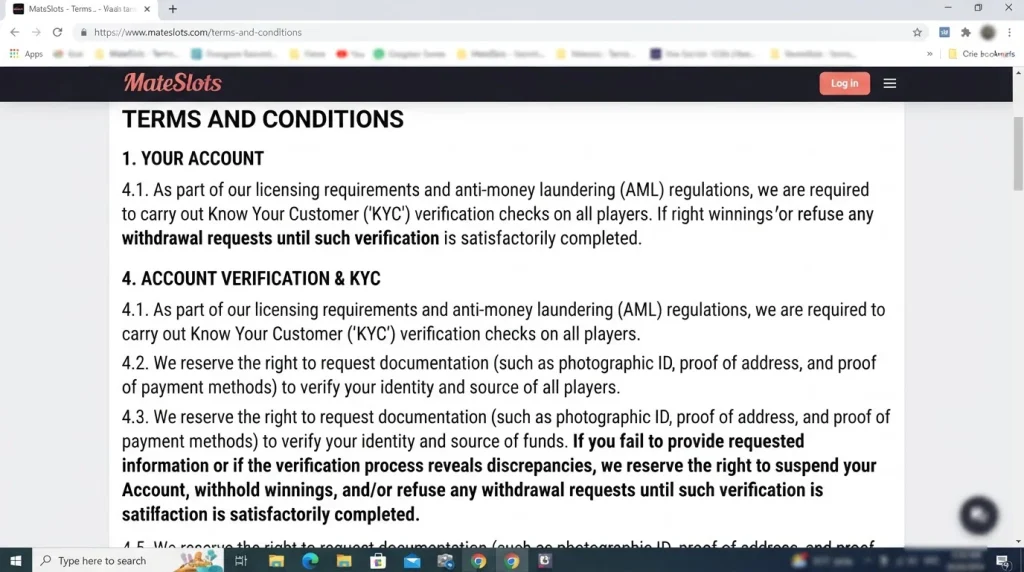
The first withdrawal commonly brings identity checks. A casino may ask for a selfie or identity document and proof of address before processing it. That can be an ordinary anti-fraud step, but it also means personal documents are being handed to an offshore operator. The privacy policy should explain how those records are stored and used; vague assurances are not a substitute for clear terms.
Payment rules can narrow the route back out. A specialist review reports that some casinos require a withdrawal to use the same method as the deposit, while other methods may accept deposits but not withdrawals. The practical consequence is easy to miss when an account is opened: a convenient way to put money in may not be a usable way to receive it. Withdrawal conditions should be read before depositing, not discovered after a balance appears.
Then there is the remedy if payment is refused. There is no Australian government body to complain to when an offshore casino withholds winnings. A dispute may have to go through the operator’s own process or an authority in its licensing jurisdiction, with no Australian regulator able to resolve the case on the punter’s behalf. That is a thin safety net.
An app installed from a file rather than an official store adds a separate security concern. Sideloaded casino apps carry risks, and their safety depends on the operator; the familiar icon does not prove the software is trustworthy. A VPN is no protection against the account terms, either: using one to reach a blocked casino may void winnings and lead to account closure.
Some operator responsible-gambling pages and specialist reviews describe controls such as deposit, loss and wager limits, session-time limits, and self-exclusion. Their presence matters, but so does whether they can be set and enforced in practice. A control that is difficult to find or reverse-engineered by the account holder is a poor barrier.
None of this makes the app format the central question. It is the distance between the screen and the institution behind it: the party holding the documents, applying the rules and deciding whether a withdrawal proceeds. Distance matters.
Free Pokies Apps and the Limits of a Review
A free pokies app can look like a casino without being a place to gamble for money. Social casino apps use virtual credits, and those apps are legal to use in Australia; they are available through the Google Play Store and Apple App Store. The resemblance is deliberate, but the credits mark a different arrangement. They are not a cash balance.
That distinction matters when a review calls an app “free”. The word may describe access to virtual-credit play, not a route to real-money gambling. A review can clarify which kind of product it is discussing and describe what its evaluation actually covers. It cannot turn a familiar layout or casino vocabulary into evidence that winnings can be withdrawn.
Nor does a favourable review establish that every feature will remain the same over time. An app’s label is less useful than a plain account of its credit system and what the reviewer observed. Without that distinction, a reader may mistake simulated play for a money service—or assume that a real-money service is available through an app store.
The free-play option has its own appeal: it borrows the rituals and look of casino play without being the same transaction. That may be enough for some people. It is not a cash game.
Can I play mobile casinos for real money without an app?
Yes. Most mobile casinos used by Australians are accessed through a browser, using the same account as on desktop; some also offer a PWA shortcut.
Can players use real-money mobile casinos in Australia?
Yes, playing at an offshore mobile casino is not illegal for an individual under the Interactive Gambling Act 2001. However, operators are prohibited from offering online casino games to people in Australia, and accepting Australian players does not mean a casino is locally authorised.
Can players deposit, withdraw, and complete verification through mobile casino cashier tools?
Mobile casino payment options can include PayID, cards, BPAY, e-wallets and cryptocurrency, with processing times varying by method; POLi no longer processes local transactions. First withdrawals usually require identity and address checks, and some casinos require withdrawals to use the deposit method.
Should players use a browser or an app?
A browser is the usual option: casino apps are rarely listed in the Australian Google Play or Apple App Store. A PWA can add an app-like home-screen shortcut, while sideloaded installation files carry security risks.
Is it safe to use mobile casinos?
A download from a casino website is not automatically trustworthy: sideloaded apps carry security risks because their safety depends on the operator and the file. A PWA is a shortcut to the website, not a separately installed native app.