Casinos That Accept Litecoin in Australia: What’s Verified
 Available in AU
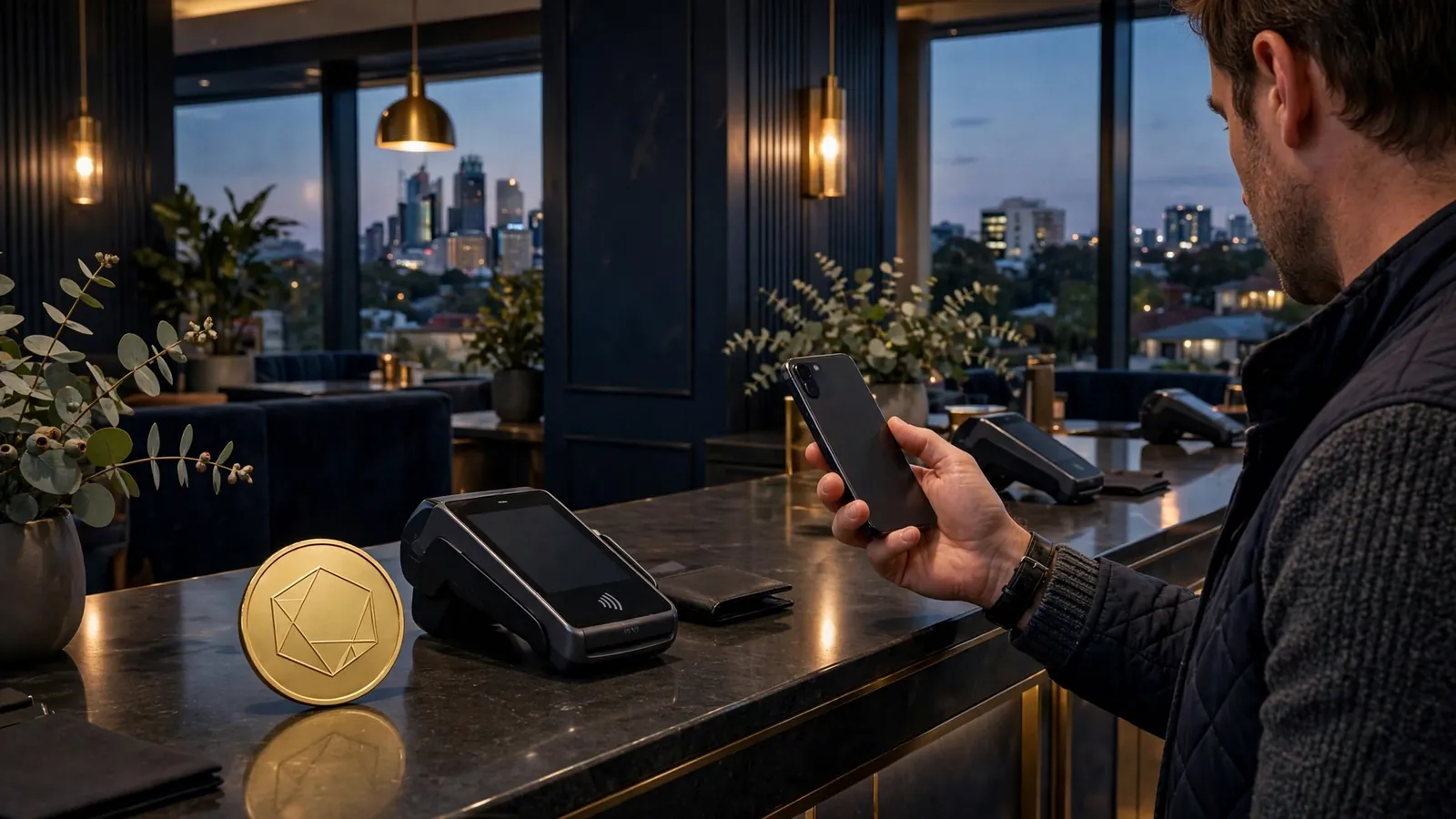
Table of content
A cautious look at Australian payment habits, casino search claims and the Litecoin details that remain unverified.
How Australian Payment Habits Meet Cryptocurrency
In Australia, paying by tapping a card has become an ordinary part of buying things. Contactless credit and debit cards are accepted almost everywhere, so the gesture itself carries little ceremony: card near terminal, payment made, day continues. Mobile wallets such as Google Pay and Apple Pay are similarly familiar across the country. A payment method can feel less like a financial decision than a small piece of infrastructure, present in the background until it is needed.
That familiarity shapes expectations beyond the shop counter. People are comfortable moving between cards, mobile wallets and services connected to banks, including PayPal. Each method occupies a slightly different place in daily life, but switching between them is not an exotic act. A person may use one service for a purchase and another for a transfer without treating the change as a statement of loyalty. Convenience is often understood as having alternatives close at hand.
Cryptocurrency enters this landscape with a different kind of name and a different set of assumptions. Litecoin may appear beside more familiar payment terms in discussions of online gambling, including searches about an Australian casino accepting the coin. The wording sounds like a request for a simple addition to a payment menu. Yet the habits formed around cards and wallets do not themselves establish anything about whether a particular service accepts a cryptocurrency. Familiarity is not evidence.
This distinction matters because the Australian payment environment is unusually easy to mistake for a universal one. When tapping a card works in so many ordinary settings, payment can seem like a neutral layer that travels wherever a website does. In practice, the same method may be present in one context and absent in another; a wallet’s everyday recognition says nothing by itself about its availability for a particular online service. The ease of switching among payment services describes consumer behaviour, not a promise of compatibility.
Casinos That Accept Mastercard in Australia: What to Know
The contrast is partly cultural. Card payments and mobile wallets are embedded in routines built around banks, merchants and familiar interfaces. Their success depends on a network of institutions and agreements that users rarely need to see. Cryptocurrency presents itself differently: the currency itself becomes part of the question, rather than merely the button chosen at checkout. That can make a Litecoin option seem like a natural extension of payment choice. It is still a separate claim, requiring its own confirmation.
There is also a linguistic shift in the way people think about money. “Tap” names an action; “wallet” names a tool; “Litecoin” names an asset. Everyday payment language tends to make the first two feel simple and immediate, while the third carries more technical weight. When all three are placed in one sentence about online gambling, the familiar rhythm of paying can smooth over important differences. A neat phrase is not a working payment route.
MiFinity casinos in Australia: what can be verified
That is why the phrase “Litecoin casino in Australia” should be understood as a description of interest, not as proof that a local payment habit has acquired a new destination. Australian consumers may be accustomed to changing between payment services, but that flexibility cannot be extended by inference to every type of digital currency or every online setting. The habit is real. The implied availability is another matter.
The ordinary payment scene remains clear: cards are widely accepted, mobile wallets are widely accepted, and people move between services without much fuss. The harder question begins when a search for a casino payment method borrows the confidence of that everyday scene. A familiar national comfort with switching can make a new option sound already settled, although the two ideas are not interchangeable. One concerns how people manage routine payments; the other concerns the terms and availability of a specific service.
In that gap, a Litecoin-related casino search reflects a modern expectation: payment should adapt to the person, rather than the person adapting to payment. Australia’s everyday habits help explain why that expectation feels plausible. They do not settle whether Litecoin is supported in any given setting. The tap is familiar. The claim still needs its own ground.
What “Best” Can—and Cannot—Mean Without Verified Litecoin Details
Use this list as a starting point for reviewing casinos associated with Litecoin in Australia. Confirm directly with each casino whether Litecoin is currently accepted and check its terms before depositing.
1. SpinsUp
License: Curacao Gaming Control Board OGL/2023/174/0082 (Dama N.V.) SpinsUp is listed with a Curacao Gaming Control Board licence, OGL/2023/174/0082, held by Dama N.V. The available details do not specify whether it accepts Litecoin.
2. LevelUp Casino
License: Curacao eGaming OGL/2023/174/0082 (Dama N.V.) · Min. deposit: A$15 LevelUp Casino has a Curacao eGaming licence, OGL/2023/174/0082, held by Dama N.V., and a minimum deposit of A$15. The available details do not confirm Litecoin acceptance.
3. MrPacho
Payout speed: crypto 30-120 minutes, fiat 24-72 hours · Min. deposit: A$30 MrPacho lists crypto payouts in 30–120 minutes and fiat payouts in 24–72 hours, with a minimum deposit of A$30. The payout information is not specific to Litecoin.
4. Ricky Casino
Payout speed: crypto under 1 hour, PayID 1-3 business days · Min. deposit: A$20 (A$30 to qualify for the bonus) Ricky Casino lists crypto payouts in under an hour and PayID payouts in 1–3 business days. Its minimum deposit is A$20, or A$30 to qualify for the bonus; the crypto details do not specify Litecoin.
5. SkyCrown
License: Tobique Gaming Commission · Payout speed: crypto ~10-15 minutes, fiat 1-5 days · Min. deposit: A$30 SkyCrown is listed with a Tobique Gaming Commission licence, a A$30 minimum deposit, and crypto payouts of approximately 10–15 minutes. The payout timing is not specific to Litecoin.
6. Kingmaker
Payout speed: crypto ~90 minutes, fiat 1-5 days · Min. deposit: A$30 Kingmaker lists crypto payouts of approximately 90 minutes, fiat payouts in 1–5 days, and a A$30 minimum deposit. The available crypto information does not identify Litecoin specifically.
7. Neospin
License: Curacao Gaming Control Board OGL/2023/176/0095 (Hollycorn N.V.) Neospin is listed with a Curacao Gaming Control Board licence, OGL/2023/176/0095, held by Hollycorn N.V. The available details do not specify whether it accepts Litecoin.
8. GoldenCrown
License: Curacao Gaming Control Board OGL/2023/176/0095 (Hollycorn N.V.) GoldenCrown is listed with a Curacao Gaming Control Board licence, OGL/2023/176/0095, held by Hollycorn N.V. The available details do not confirm Litecoin acceptance.
9. Thor Casino
License: Curacao – Antillephone N.V. (Versus Odds B.V.) · Min. deposit: EUR 20 Thor Casino is listed with a Curacao licence associated with Antillephone N.V. and Versus Odds B.V., and a minimum deposit of EUR 20. The available details do not specify whether it accepts Litecoin.
10. Wild Tokyo
License: Curacao · Payout speed: crypto 30-60 minutes, fiat 1-5 days · Min. deposit: A$10 Wild Tokyo is listed with a Curacao licence, a A$10 minimum deposit, and crypto payouts in 30–60 minutes. The payout information does not specify Litecoin.
“Best” sounds like a verdict, but it is only as sound as the evidence beneath it. A comparison of online services said to accept Litecoin would need to establish that the payment method is currently supported, that the stated conditions apply to Australian customers, and that the comparison uses criteria that matter to the people being assessed. Without those details, a ranked list would turn uncertainty into a neat-looking answer.
A name appearing beside Litecoin is not enough. Payment options can differ by location, account status or the point in a transaction at which they are offered. A useful assessment would need a clear basis for each claim: what is supported, for whom, and under what terms. It would also need to be current. A page that once described a service cannot, by itself, establish that the same arrangement remains in place.
The word “best” also hides a choice of priorities. One person might care most about whether Litecoin is accepted at all; another might put greater weight on the clarity of payment conditions or the quality of customer support. Those are different judgments, not interchangeable measures. A responsible comparison would disclose its criteria rather than present a personal weighting as an objective result.
A ranked list of the "best" services can turn uncertainty into a neat-looking answer if it lacks verified details on current support and terms for Australian customers.
Then there is the word “site”. A branded website is not a complete description of the service behind it. The terms, account procedures and payment arrangements would have to be examined as part of the same assessment. Before financial activity, online casinos commonly ask customers to undergo identity and customer checks. That step is a reminder that a payment label alone says little about what an account holder may be asked to do or provide.
A claim that a service accepts Litecoin would therefore require more than a logo, a search snippet or a mention in an old review. It would need to be checked against the service’s own current conditions and the details available to the relevant customer. If those sources conflict, the disagreement should remain visible. Choosing the more attractive version would make the prose smoother, not the conclusion more reliable.
The same standard applies when a comparison is framed around Australian customers. A general statement about cryptocurrency support elsewhere does not establish that the same option is available in Australia. Nor does a broad description of a payment method prove that any particular service accepts it. The location and the service both matter.
Casinos That Accept Neteller in Australia: What’s Verified
There is a difference between saying that a “best Litecoin casino” cannot be established and saying that no service could ever support Litecoin. The first is a judgment about the evidence needed for a comparison; the second is a sweeping claim. Neither should be confused with a recommendation. Without confirmed, comparable details, naming a winner would suggest a level of scrutiny that has not been demonstrated.
Bonus language creates a further problem because an offer cannot be judged from its headline alone. A proper comparison would require the relevant terms, eligibility conditions and restrictions, all tied to a specific service and customer context. General claims about a welcome offer do not supply that missing basis. They can make an unsupported ranking look persuasive while leaving its central assumptions untested.
A careful comparison could still be built, but it would have to begin with verifiable information and a transparent method. Each entry would need the same checks, and any uncertainty would need to be stated rather than hidden beneath a medal or a “top pick” label. Where evidence is incomplete, the honest result is not a lower rank. It is no rank.
Verification Standards
- A name appearing beside Litecoin is not evidence of current support.
- “Best” is a subjective judgment based on individual priorities.
- Verified information must include terms, eligibility, and current status.
- A responsible comparison discloses criteria rather than presenting personal weightings.
That is less dramatic. It is also more useful than a confident answer whose foundation cannot be inspected.
Australian Rules and the Limits of Offshore Casino Protection
A payment method does not change the legal character of a service. Whether an offshore operator advertises a casino account in dollars or describes it as a place to play with Litecoin, the relevant question in Australia is whether it offers real-money online casino games to people located here. The currency may be digital; the legal boundary is not.
The Interactive Gambling Act 2001 prohibits operators from providing online casino games to people in Australia. That prohibition covers the operator’s conduct, rather than expressly making a player’s use of an offshore site a criminal offence. The distinction matters: the absence of an explicit offence for the player is not approval of the service, nor a promise that it will be available or dependable.
Enforcement belongs to the Australian Communications and Media Authority, commonly known as ACMA. Its role is to enforce the Act, placing oversight with a national regulator rather than with an offshore casino’s own account rules or promotional language. A site’s claim that it accepts Australian customers cannot settle whether its service is lawful.
The same caution applies to an app, a mobile site or a payment page. Those are different routes to a service, not different legal categories. If the underlying activity is real-money online casino play offered to people in Australia, changing the screen or the payment instrument does not remove it from the Act’s scope. Litecoin does not create an exception.
Casinos That Accept POLi in Australia: What to Know
There is also a practical difference between the protections attached to a service in Australia and the promises made by an offshore business. Australian consumer law does not protect players using offshore casinos. If a dispute arises over an account, a payment or a withdrawal, the familiar domestic consumer framework is not a safety net simply because the player is in Australia. An Australian-facing website is not the same thing as Australian protection.
This is the part often obscured by the language of convenience. A cashier can make a transaction look routine; a mobile interface can make a distant operator feel close. Neither establishes that an Australian regulator supervises the business, and neither converts an overseas casino into a locally protected service.
The legal distinction is plain, if not comforting: operators are prohibited from offering these games to people in Australia, while the Act does not explicitly criminalise players for using offshore sites. That does not make the arrangement lawful on the operator’s side, or protected on the player’s. Dry ground, not a safe harbour.
Bonus and Slot Searches Without Unsupported Promises
A request for a Litecoin bonus combines two separate claims: that a service accepts Litecoin, and that it offers a promotion under stated conditions. The wording alone establishes neither. A welcome offer, a deposit promotion and a no-deposit offer are different kinds of inducement; attaching the same payment method to each does not make them interchangeable or establish that any is available.
That distinction matters because a bonus is not simply a headline. Its practical meaning depends on the rules attached to it: who qualifies, what activity is required, which payment methods count and how any resulting balance can be used. Without those details, describing an offer as the “best” would turn a search phrase into an unsupported recommendation. A label is not a set of terms.
Do
- Examine the specific rules attached to a bonus.
- Check the eligibility conditions and restrictions.
- Verify if the payment method is actually eligible for the offer.
Don’t
- Judge a bonus by its headline alone.
- Assume a welcome offer is available based on a search phrase.
- Treat different types of inducements as interchangeable.
The same caution applies to searches for Litecoin-related games or sites. A search for online slots, video slots or free play may express interest in a category, but it does not identify a verified game, establish that a particular product is available, or show that Litecoin can be used in connection with it. Nor does the appearance of “free” settle what the word means in practice. It may be part of a phrase, not a clear statement of conditions.
These distinctions are especially important when several attractive ideas are bundled together: a welcome bonus, no deposit, free play and a preferred coin. Each describes something different. None confirms the others. A promotion might name a payment method without making it eligible; a game might appear in a catalogue without being connected to a particular payment flow. Those are questions of terms and product details, not matters a search label can answer.
Promotional language tends to make the offer seem like a single object. In reality, it is a small contract of conditions. The headline may be brief; the rules that determine eligibility and use are where its meaning resides. If those conditions are not clear, the apparent value cannot be assessed responsibly. The sensible distinction is between a phrase that expresses what someone hopes to find and an offer whose actual terms can be examined.
Account checks add another layer. Before handling financial transactions, online casinos commonly ask customers to complete identity checks known as Know Your Customer, or KYC, procedures. That requirement is separate from whether an offer is advertised and whether a payment method is named. A promotional label cannot establish that an account will qualify, or that a transaction will be accepted.
Bitcoin Cash Casinos in Australia: What to Know
The local setting also gives promotional language a significance beyond marketing. Australian law prohibits operators from providing real-money online casino games to people in Australia. An enticing description does not change the legal character of the service it describes. Nor does a bonus heading amount to evidence that a particular product is available to Australian residents.
Searches combining Litecoin with a bonus or game category are therefore best understood as expressions of intent, not as confirmation of an offer, a game catalogue or payment support. In particular, there is no sound basis for turning such wording into a list of recommended sites or promising a free-play option. The claims would need specific, applicable terms and product details before they could mean more than their headline.
The distinction is plain, if less exciting than the headline: a promotion is only as definite as its conditions. A coin name, a bonus label and a game category placed together do not supply those conditions. The words make a proposition. They do not prove it.
Cryptocurrency Transactions: What the Available Evidence Says
Cryptocurrency is often discussed as though it were a single payment system with different names attached. It is not. Bitcoin, Ethereum and Litecoin are separate networks, and a claim about one does not automatically describe another. That distinction matters when casino-payment language treats a Litecoin transfer as interchangeable with any other digital-asset transaction.
Bitcoin, Ethereum, and Litecoin are separate networks; a claim about one does not automatically describe the characteristics or availability of another.
General information about cryptocurrencies such as Bitcoin and Ethereum describes deposits and withdrawals as instant, with limited or no fees. This is a broad account of those currencies’ reported transaction characteristics. It does not establish that a Litecoin casino payment would be instant, cost little, or carry no fee. The network, the service handling the transaction and the operator’s own payment arrangements can all matter; the shared label “cryptocurrency” is not a technical specification.
The word “instant” also needs care. A transaction can be initiated quickly without every stage of a payment being completed at the same moment. A platform may have its own process for recognising a transfer, crediting an account or releasing funds. The general statement about Bitcoin and Ethereum does not describe those stages for Litecoin, or establish how a particular gambling service would handle them. A quick network transfer and a completed casino transaction are not necessarily the same event.
Fees are similarly easy to flatten into a slogan. “Limited or no fees” is a description of the cited Bitcoin and Ethereum characteristics, not a promise that every transaction involving any cryptocurrency is free. It cannot settle whether a Litecoin transfer would involve a network charge, a service charge or a cost imposed elsewhere in the payment chain. Nor does it show which party would bear that cost.
This is where broad comparisons become unreliable. The properties of a coin’s network are distinct from the policies of a service that might accept it. Even if a digital currency is associated with rapid, low-cost transfers in general, that says nothing by itself about whether an operator supports it, what conversion arrangements apply, or how an account would be credited. Those are separate claims, not consequences of the currency’s name.
Neosurf and Australian Casinos: What Is Verified
The same caution applies when Litecoin is presented as a discreet or anonymous way to transact. A general description of Bitcoin and Ethereum’s speed and fees says nothing about privacy, identity checks or the records kept by a platform. Transaction speed is not anonymity. A payment method’s technical design cannot be used to infer an operator’s procedures.
So the available generalisation is narrow: Bitcoin and Ethereum are described as enabling fast deposits and withdrawals with limited or no fees. Extending that statement to Litecoin would turn a comparison into an unsupported guarantee. Similar category; different evidence.
Playing With Litecoin: The Gap Between Search Terms and Evidence
The idea behind playing with Litecoin is easy to understand: a digital currency can seem like a direct way to move value between a wallet and an online service. That general appeal, however, does not establish that a particular casino accepts Litecoin, or that a payment method can be used while playing there. The distinction is less glamorous than the promise implied by a button marked “deposit”. It is also the important one.
Information about Bitcoin and Ethereum describes those currencies, not every cryptocurrency by association. They are reported to allow deposits and withdrawals almost instantly, with little or no fee. Litecoin cannot simply inherit those conditions. A casino’s payment arrangements depend on the service and the coin it actually supports; broad statements about crypto do not confirm a Litecoin payment path, or explain what happens after a payment is sent.
Nor does a payment method, by itself, establish what games a service offers or whether any particular game can be played with that currency. The cashier, the account and the game catalogue are separate parts of a service. A claim that Litecoin can be used for casino play would need to connect those parts, rather than treat “crypto accepted” as a complete description. That detail matters. Labels travel faster than terms.
Legal Restriction
The Interactive Gambling Act 2001 prohibits operators from providing real-money online casino games to people located in Australia.
The same caution applies to requests for a Litecoin casino with no identity checks. A payment method does not demonstrate that an account can transact without verification. Online casinos commonly ask customers to undergo Know Your Customer checks before handling financial transactions. Whether a particular service applies those checks, and at what stage, cannot be inferred from the coin named in a payment claim.
“Playing with Litecoin” therefore bundles together several separate propositions: that a service is available, that it accepts Litecoin, that the currency can be used for the relevant activity, and that the account and transaction conditions permit it. Evidence for one proposition would not prove the others. A wallet balance is not a cashier option; a cashier option is not a confirmed route into a game.
The phrase can make a payment arrangement sound settled before the practical details have been established. For Australian audiences, that language also sits within a market where real-money online casino services are prohibited for operators to provide. A general description of cryptocurrency is not an endorsement of casino play, and it should not be mistaken for confirmation that a service is lawful or accessible.
In short, the appeal of digital payment is real as an idea, but Litecoin-specific play cannot be inferred from it. The coin’s name is not the evidence.
Deposits, Withdrawals and the Unanswered Litecoin Questions
A deposit and a withdrawal may use the same coin, but they are separate steps in a payment arrangement. A casino might accept a cryptocurrency for deposits without offering withdrawals through that route. Even where both are supported, the conditions can differ. The label “Litecoin” alone says little about how money moves through a particular cashier.
MateSlots Payment Methods: AUD Deposit Options Australia
That distinction matters to anyone weighing a Litecoin deposit against a promised quick payout. Processing time, transaction limits and fees are practical terms, not decorative details. They depend on the service and the payment route, so broad claims about one coin cannot settle what a particular casino will do. “Instant” is a tempting word; it is not a transaction record.
Information about Bitcoin and Ethereum describes those cryptocurrencies as allowing instant deposits and withdrawals with limited or no fees. That is a general comparison, not a guarantee that Litecoin follows the same pattern at a casino. Nor does a description of a cryptocurrency’s transfer characteristics establish when an operator credits a deposit or releases a withdrawal. Those are different parts of the journey.
A deposit route can also come with conditions that are easy to overlook: whether the cashier lists Litecoin, whether a deposit must be made through the same method before withdrawal, and whether the casino sets separate fees or limits. Without the terms attached to a specific service, none of those details can be assumed. The coin is only one link in the chain.
“No-deposit” language belongs to another question. It describes an offer, not a payment method or a withdrawal timetable. A bonus code cannot establish that Litecoin is accepted, and its wording alone says nothing about how any resulting balance could be withdrawn. The practical terms would need to be clear and specific; a slogan is not a cashier.
Attention Australian consumer law does not protect players using offshore casinos, regardless of how smooth the payment flow appears.
For Australian readers, payment mechanics also sit within a broader legal reality: Australian consumer law does not protect players using offshore casinos. A smooth-looking payment flow does not change that exposure, and a cryptocurrency label is not a substitute for knowing who controls a service or what recourse exists if a transaction is disputed.
The useful distinction is therefore between a coin’s general capabilities and the actual rules of a given cashier. Deposit support, withdrawal support, timing, limits and fees are separate matters. One label cannot answer them all.
Live Dealers and Litecoin: No Verified Platform Details
Live-dealer play joins a streamed table with a dealer working in real time. That format describes how a game is presented; it says nothing, by itself, about how a payment is made. Litecoin support is a separate question, governed by the service’s cashier and payment rules rather than by the presence of a live video feed.
The distinction matters because two labels can sit side by side without proving a connection. A site may describe itself as a cryptocurrency casino, while a live-dealer page describes its table format. Neither description alone confirms that Litecoin can fund that activity. Nor does the mention of Litecoin establish that a live table is available. Payment access and game access are different claims.
Account checks form another part of the process. Before financial transactions, online casinos commonly ask customers to complete identity and customer checks, known as Know Your Customer assessment. That requirement concerns the account and its financial activity; it does not establish that a particular coin or live-dealer service is supported.
CashToCode Casinos in Australia: What Acceptance Means
The Australian setting makes promotional language especially poor evidence. Real-money online casino games are prohibited for operators serving people in Australia under the Interactive Gambling Act 2001. A polished live studio, a cryptocurrency label or a page describing a cashier cannot change that legal position.
The phrase “Litecoin live dealer” therefore compresses several separate ideas: a payment method, a table format and a service’s availability. Treating them as one feature turns a convenient label into an unsupported promise. Live footage is not payment evidence.
Litecoin Casino Sites: Separating Search Language from Verification
A site described as a Litecoin casino carries two separate claims: that it offers online casino games to Australians, and that Litecoin is an accepted payment method. The label alone establishes neither. A familiar-looking name, a page mentioning cryptocurrency or a general list of payment options cannot confirm that a particular service supports Litecoin for Australian users.
That distinction matters because payment language can be broad while the actual arrangement is specific. A reference to digital currency does not identify which coin is accepted, whether the option applies to deposits or withdrawals, or whether it is available in Australia. Without those details, calling a site a verified Litecoin destination would turn a category label into a promise.
The same caution applies when Litecoin is paired with games or pokies. A page that mentions both does not, by that fact alone, establish that the games can be accessed by people in Australia or that Litecoin can be used with them. The wording may describe an offering aimed at another jurisdiction, or simply place two subjects side by side. Neither possibility settles the practical question.
A site-level label is not evidence of access or payment support; a foreign licence does not override Australian restrictions.
There is also a legal boundary behind the terminology. Under the Interactive Gambling Act 2001, operators are prohibited from offering online casino games to people in Australia. The Act does not explicitly criminalise players for using offshore sites, but that does not make an offshore service lawful for its operator or protected for its customers. Australian consumer law does not protect people who use offshore casinos.
“Trusted” and “licensed” are not self-proving descriptions. A claim of licensing needs to identify a licence that actually applies to the service and its Australian audience; the word itself does not supply that protection. In this market, a foreign licence does not override the Australian restriction, and it does not make a Litecoin payment claim reliable.
The careful distinction is modest but important: a site-level label is not evidence of access, payment support or consumer protection. The label travels faster than the facts.
Why Card and Wallet Familiarity Does Not Confirm Litecoin Support
Australia’s payment culture can make a new payment method seem like a small extension of an existing one. Contactless cards are accepted across the country, as are mobile wallets such as Apple Pay and Google Pay. People move between cards, wallet apps and bank-linked services without treating each change as a new financial system. That fluency, however, says little about whether a particular online service accepts Litecoin.
Cards and cryptocurrencies belong to different payment arrangements. A card transaction travels through a network involving the card issuer and the merchant’s payment arrangements. Litecoin, by contrast, is a cryptocurrency. Recognition of a card brand at a cashier cannot establish that the cashier supports a digital currency, or show how such a payment would be handled. Familiarity is not compatibility.
A specialist review has reported that Visa is accepted more widely at Australian online casinos than American Express. That is a time-sensitive comparison, not a permanent rule for every operator. It concerns two card brands; it does not place Litecoin on the same acceptance scale. Nor does it provide a basis for treating a casino that accepts Visa as a Litecoin casino. One payment channel cannot stand in for another.
Casinos That Accept PayID in Australia: What to Verify
The same distinction applies to wallets and bank-linked services. A person accustomed to switching between payment options may reasonably expect a cashier to offer several methods, but the habit belongs to the customer, not necessarily to the service. Payment menus are shaped by the arrangements an operator makes and the rules that apply to its transactions. A familiar interface can conceal very different payment systems behind it.
That is why descriptions such as “best” or “latest” cannot be made meaningful by borrowing confidence from ordinary card use. A claim about a Litecoin casino would require evidence specific to Litecoin: an explicit payment option, clear conditions and a defined relationship between deposits and any permitted withdrawals. Card acceptance supplies none of those details. It also cannot substantiate claims about Litecoin bonuses, games or pokies. Those are separate claims, not natural consequences of a currency being available.
In Australia, the legal setting matters before payment convenience enters the picture. The Interactive Gambling Act 2001 prohibits operators from providing real-money online casino games to people physically in Australia, and the Australian Communications and Media Authority enforces the Act. Australian consumer law does not protect players who use offshore casinos. A polished cashier, familiar card logos or a cryptocurrency label does not change that position.
The broader pattern is revealing. Payment systems often feel interchangeable at the point of use because they are presented in the same small cashier window. But ease of switching between them is a social habit, not proof that their protections, processing arrangements or legal status are alike. The window is not the system.
So a search for a Litecoin casino site cannot be resolved by noting that Visa appears more widely accepted than Amex in a specialist review, or that Australians commonly use digital wallets. Those observations describe other payment methods. They do not verify Litecoin support at any particular site, and they do not make offshore casino services lawful or protected for Australian customers. The distinction is plain, if less convenient than a payment icon: familiarity does not travel across systems.
What are the deposit and withdrawal limits at the best Amex casinos?
Limits are set by each casino and can vary. Check the casino’s cashier or payment terms for its current Amex deposit and withdrawal limits.
How do you check if casino sites accept Amex deposits?
Check the casino’s cashier for American Express as a deposit option. Some Australian online casinos accept Amex, but others do not.
What are the fees involved with American Express payments?
Amex gambling transactions are typically free, but a casino may add a 1.5% surcharge, and Amex cards incur a 3% currency conversion fee. Withdrawal fees may also apply.
Are there fees for using Amex at online casinos?
Deposits typically have no fee, but a casino may charge a 1.5% surcharge, and Amex applies a 3% currency conversion fee. Withdrawal fees may apply as well.
Can I withdraw winnings directly to my American Express card?
Some casinos do not allow withdrawals to Amex, and those that do require you to have deposited with Amex first. Withdrawals can take up to five days to clear, and fees may apply.
Are there any fees associated with using American Express at online casinos?
Amex deposits are typically fee-free, but a casino may charge a 1.5% surcharge and Amex cards incur a 3% currency conversion fee. Withdrawal fees may also apply.