Plinko casino Australia: access, play and payouts
 Available in AU

Table of content
A look at how Plinko is presented, what a review can verify, and the distinctions between free play, cash prizes and bonus terms.
From the Pokie Floor to the Plinko Slot
Putting “slot” beside “Plinko” changes the frame before it tells anything about the game. The familiar language of pokies carries expectations of a software product: a named title, a provider, a display of rules and a return-to-player figure. Yet a label such as “Plinko slot” does not, by itself, establish who made a particular game or whether it belongs to a particular software catalogue. The word can describe a format, a theme, or simply the way a page chooses to present the name.
That distinction matters because the slot vocabulary is persuasive by habit. A game described as a pokie may seem to arrive with a settled identity, as though its name, studio and mathematical profile were already attached. They may not be. “Gods of Plinko,” “Plinko Rush” and “Slot Temple” are the sorts of phrases that can appear around the subject, but a phrase alone cannot confirm a specific title or its maker. A name is an invitation to look closer, not evidence of provenance.
Choosing a Plinko casino in Australia involves more than finding a game: it is worth checking what is disclosed about licensing, deposits and withdrawals. Use these operator notes as a concise reference when considering your options.
1. SpinsUp
License: Curacao Gaming Control Board OGL/2023/174/0082 (Dama N.V.) SpinsUp lists a Curacao Gaming Control Board licence, OGL/2023/174/0082, held by Dama N.V. This gives readers a specific licensing detail to consider.
2. LevelUp Casino
License: Curacao eGaming OGL/2023/174/0082 (Dama N.V.) · Min. deposit: A$15 LevelUp Casino lists a Curacao eGaming licence, OGL/2023/174/0082, held by Dama N.V., and a minimum deposit of A$15. Those details help set expectations before depositing.
3. MrPacho
Payout speed: crypto 30-120 minutes, fiat 24-72 hours · Min. deposit: A$30 MrPacho lists crypto payouts in 30–120 minutes and fiat payouts in 24–72 hours. Its stated minimum deposit is A$30.
4. Ricky Casino
Payout speed: crypto under 1 hour, PayID 1-3 business days · Min. deposit: A$20 (A$30 to qualify for the bonus) Ricky Casino lists crypto payouts in under an hour and PayID payouts in 1–3 business days. The minimum deposit is A$20, or A$30 to qualify for the bonus.
5. SkyCrown
License: Tobique Gaming Commission · Payout speed: crypto ~10-15 minutes, fiat 1-5 days · Min. deposit: A$30 SkyCrown lists a Tobique Gaming Commission licence, with crypto payouts taking about 10–15 minutes and fiat payouts 1–5 days. Its minimum deposit is A$30.
6. Kingmaker
Payout speed: crypto ~90 minutes, fiat 1-5 days · Min. deposit: A$30 Kingmaker lists crypto payouts at about 90 minutes and fiat payouts in 1–5 days. The stated minimum deposit is A$30.
7. Neospin
License: Curacao Gaming Control Board OGL/2023/176/0095 (Hollycorn N.V.) Neospin lists a Curacao Gaming Control Board licence, OGL/2023/176/0095, held by Hollycorn N.V. This licensing information is the key disclosed detail for readers to weigh.
8. GoldenCrown
License: Curacao Gaming Control Board OGL/2023/176/0095 (Hollycorn N.V.) GoldenCrown lists a Curacao Gaming Control Board licence, OGL/2023/176/0095, held by Hollycorn N.V. Readers can use this specific licensing detail as part of their checks.
9. Thor Casino
License: Curacao – Antillephone N.V. (Versus Odds B.V.) · Min. deposit: EUR 20 Thor Casino lists a Curacao licence from Antillephone N.V. (Versus Odds B.V.). Its stated minimum deposit is EUR 20.
10. Wild Tokyo
License: Curacao · Payout speed: crypto 30-60 minutes, fiat 1-5 days · Min. deposit: A$10 Wild Tokyo lists a Curacao licence, crypto payouts in 30–60 minutes and fiat payouts in 1–5 days. Its minimum deposit is A$10.
The pokie floor has long taught people to read machines through their cabinets, symbols and branding. Online, those cues become names, thumbnails and provider labels. The shift is less a change in the word “game” than in the machinery of recognition: a person sees a familiar label and assumes that the details behind it are equally familiar. In practice, a slot-style presentation can borrow the aura of a product category without answering the basic question of who supplied the software.
For Plinko, that can leave the word “slot” doing too much work. It suggests a polished, packaged entertainment product, while saying little about whether the thing being described is a distinct pokie, a digital adaptation, or a page using the name loosely. Even the phrase “Plinko slot machine” can imply more certainty than it contains. The machine-like framing is not proof of a conventional pokie structure, nor does it identify the provider.
Software context is most useful when it is specific. A provider name can be checked against a game listing; a return-to-player figure can be tied to a particular title and version. Without that connection, general information about a studio should not be mistaken for a statistic about every game that happens to share a theme or label.
KA Gaming’s slot RTP percentages typically fall between 94% and 96%. That range describes the provider’s slots in general; it does not establish the RTP of a Plinko-branded title, or confirm that a particular Plinko product comes from KA Gaming. The distinction is small in wording and large in consequence. A provider-wide range is not a title-specific figure, and a title-specific figure is not a promise of what any individual player will receive.
RTP itself belongs to the long view of a game’s design, not to a single session. It is a way of describing expected returns across extensive play, not a forecast for one person at one machine. In a slot context, the number may look like a crisp answer to an uncertain question. It is useful only when the game and the source of the figure are clear. Otherwise, precision becomes decoration.
Lightning Link Online Pokies in Australia: Venue Play
The same care applies to searches for a “top” Plinko slot or a review of Plinko slots. A ranking can make the category appear settled, even when the underlying titles, providers and product details have not been identified. A review can discuss a presentation; it cannot turn an unverified name into a verified software relationship. A demo label, too, describes a mode of presentation rather than proving anything about a title’s maker or return.
This is the point at which slot language stops clarifying and starts smoothing over gaps. The category may be familiar, but familiarity is not verification. A Plinko-themed page should be read as a claim about a product only to the extent that it identifies the product. Otherwise, the safest description is simply that it is presented in slot form.
The distinction is not pedantry. Pokies have a particular place in Australian life: they are physical objects, commercial products and social habits all at once. Online labels inherit some of that cultural weight. A digital title can sound like something already known, even when the name alone reveals almost nothing about its software. The familiar frame travels faster than the evidence.
So the meaningful question is not whether a title can be called a Plinko slot. It is whether the label leads to a named game, an identifiable provider and information that belongs to that game rather than to a broader catalogue. Where those links are absent, the slot framing remains just that: framing. A neat label. A less neat reality.
Online Play Meets Australia’s Regulatory Boundary
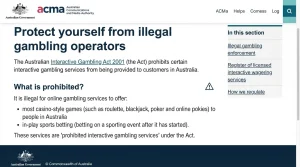
A Plinko title can be presented as a slot, a casino-style game or a live product, but its label does not change the Australian legal boundary. The Interactive Gambling Act 2001 makes it unlawful for an operator to provide real-money online casino games to people physically in Australia. That category includes slots and table games, as well as online casino-style offerings such as Plinko. The decisive detail is where the customer is located, not the language used to describe the game.
Mines casino game in Australia: rules and checks
This distinction can be easy to miss on a screen. An offshore service may display Australian currency, accept a payment from an Australian account and describe its games as available to local visitors. Those features show that the service has made access possible; they do not make its offer lawful under Australian rules. Offshore online casinos often operate under licences issued elsewhere. A licence from another jurisdiction is not an Australian authorisation to provide prohibited casino services here.
The law is directed at the supply of the service. It is the operator, not the individual customer, who faces the prohibition on providing real-money online casino games to people in Australia. Players are not criminalised simply for using an offshore site. That difference matters: the market may appear to function across borders, while the legal responsibility for making the prohibited offer rests elsewhere. Apparent availability is not the same thing as local approval.
Nor does a game acquire a different status because it is described as “live,” attached to a casino brand or given a distinctive name. A search for an online casino with Plinko may lead to pages that present the game as part of a broader gambling catalogue. But where the service involves real-money online casino play for someone physically in Australia, the relevant question is not whether the game is novel. It is whether the operator is supplying a prohibited interactive gambling service.
The Australian Communications and Media Authority, or ACMA, enforces the Interactive Gambling Act and monitors compliance with federal rules. Its work includes action against prohibited services. The authority can ask Australian internet service providers to block websites that provide illegal interactive gambling services or advertise them in Australia. A site being visible in one moment, or remaining reachable through a particular route, therefore offers no reliable evidence that it is permitted or will remain accessible.
Legal Prohibition
The Interactive Gambling Act 2001 makes it unlawful for operators to provide real-money online casino games to people physically in Australia.
Blocking is a practical expression of the boundary, not a complete account of it. Website addresses can change, and a page may appear before enforcement action takes effect. That can make the landscape look less settled than the law itself. The legal position does not depend on whether a particular page has already disappeared from view: the restriction concerns the operator’s provision of the service to people in Australia.
The penalties also underline that this is not a lightly regulated local casino category. Under the Act, the maximum daily penalty for an individual who violates it is $360,000; for a corporation, it is $1.8 million per day. Those figures concern violations by providers, not a fine imposed on a player merely for using an offshore site. Keeping the two roles separate prevents a common confusion: a service can be accessible to a customer while its provision remains prohibited.
This is why payment acceptance should not be mistaken for a regulatory signal. A transaction processed in Australian dollars, or a familiar domestic payment method appearing at checkout, does not establish that the casino has local approval. It only describes part of the commercial arrangement. Similarly, an offshore licence speaks to the jurisdiction that issued it; it does not override the Australian rule governing services offered to people within the country.
The distinction applies across the language used to market a game. “Plinko casino online,” “Plinko pokies” and a live-casino label may point to different presentations, but wording alone cannot move a real-money casino service outside the Act. A product name is not a legal category. The law looks to the nature of the service and its supply to people in Australia, rather than the polish of the page or the familiarity of its branding.
Live Baccarat Online in Australia: Rules and Risks
That boundary sits alongside a wider public concern about gambling harm. Gambling can cause serious harm, particularly for vulnerable people, and online access does not make those consequences less real. Anyone who gambles must be at least eighteen, but age eligibility does not turn a prohibited online casino offer into a lawful one. The rules are about both who may gamble and what services operators may provide.
Australian payments, offshore licences and a functioning game lobby can create the appearance of an ordinary consumer market. Legally, the picture is different: the Act restricts operators from supplying real-money online casino services to people in Australia, while ACMA has powers to act against prohibited services and their advertising. Access may be attempted; endorsement is another matter.
Real-Money Play, Winnings and the Wait to Cash Out
A balance shown on a gambling account is not the same thing as money in a bank account. That distinction becomes visible at withdrawal: a displayed figure may be subject to the site’s rules, identity checks and payment arrangements before any funds reach the person who requested them. A game labelled Plinko, or a version presented as a slot, does not change that basic separation between an on-screen balance and a completed payment.
For Australian residents, there is a prior boundary. The Interactive Gambling Act 2001 prohibits operators from providing real-money online casino games to people in Australia. A site’s willingness to accept a deposit, or to display a balance in Australian dollars, does not establish that its service is lawful here or that a withdrawal will be straightforward. Players are not criminalised for using offshore sites, but the regulatory position for operators remains clear. No payment screen can make it otherwise.
Regulatory Status
Players are not criminalised for using offshore sites, but the legal responsibility for providing prohibited real-money casino services rests with the operator.
Where an offshore service does offer withdrawals, its rules can include a minimum amount before a request is accepted. Reported minimum withdrawal thresholds commonly fall between A$75 and A$150. The precise figure depends on the operator’s terms, and a balance below the threshold may not be eligible for withdrawal yet. That is a practical restriction, not proof that a larger balance will be paid promptly or at all.
The first request can involve another hurdle: KYC, or know-your-customer checks. A site may ask for identity documents such as a passport or driver’s licence, alongside a utility bill. These documents are used to match the account holder’s identity and address with the information on the account. A request for paperwork can therefore pause a cashout while the operator reviews it. The existence of a document list does not tell how long an individual review will take, nor does it guarantee that the submitted material will be accepted.
This is where the language of “winnings” can run ahead of the transaction. A figure credited to an account is not necessarily a sum already transferred, and a withdrawal request is not the same as a completed payment. The distinction is especially important when a site’s conditions set an eligibility threshold or require identity checks. Each stage has its own status: a balance may be visible, a request may be pending, and a payment may still be unreceived. These are not interchangeable descriptions.
Low Volatility Slots in Australia: How They Work
The familiar search for a Plinko game played for real money often collapses all of those stages into one idea: play, win, withdraw. In practice, the path is administrative as well as financial. Account details may need to match the identity documents; the requested amount may need to meet the site’s minimum; and the payment method may affect how a transfer is handled. None of those mechanics turns an offshore casino into an Australian-regulated service. They describe the gap between a balance on a screen and money a person can actually use.
A request for a no-deposit offer belongs to a different question. Whether funds came from a deposit, a promotion or some other credit can affect the conditions attached to them; withdrawal logistics alone cannot establish that the balance is cash or freely withdrawable. Bonus-derived funds may carry wagering requirements, so they should not be treated as ordinary cash. That is a separate set of restrictions from identity checks and minimum withdrawal thresholds.
A download or app does not alter these distinctions either. Software on a phone can make an account easier to open or monitor, but it does not settle whether an operator can lawfully offer casino services in Australia, whether a withdrawal meets the site’s conditions, or whether KYC has been completed. The interface is immediate. The transaction is not.
Cashout Process
Identity Verification
The operator requests KYC documents, such as a passport, driver’s licence, and a utility bill to match account details.
Threshold Check
The requested withdrawal amount is checked against the site’s minimum threshold, commonly between A$75 and A$150.
Funds Transfer
Once verified and the threshold is met, the balance is processed for transfer to the user’s account.
These practical details matter because real-money gambling can cause serious harm, particularly for vulnerable people. A balance that remains unavailable can create pressure to keep playing or to deposit more; neither is a sound way to recover access to funds. Gambling is for adults aged eighteen or older, and it should not be treated as a source of income. A cashout policy is no safety net.
The Game Behind the Plinko Name
“Plinko” carries a picture before it carries a rulebook. The name suggests a ball-game spectacle: a small object released into a field of chance, its route visible while its destination remains uncertain. That image is easy to recognise, which helps explain why the word can travel from television entertainment into casino language. But recognition is not the same as a shared set of rules. A familiar name can cover games that differ in presentation, choices and outcomes.
The distinction matters because “Plinko” is often used as though it identifies one settled game. In practice, the label is better treated as a family resemblance than a guarantee of identical play. A casino game described as Plinko may draw on the same broad visual idea without reproducing every feature of another version. The title alone cannot establish how a particular game works, what choices it offers or how its results are determined.
High-Volatility Slots in Australia: How They Work
That uncertainty is not a defect in the name so much as a consequence of names doing several jobs at once. They identify, evoke and sell an idea. “Plinko” can summon a recognisable format for someone who has never encountered a casino version; it can also make distinct digital products sound like members of one simple category. Convenient shorthand. Not a specification.
There is a small social history in that movement. Games do not arrive in a casino vocabulary untouched by the entertainment around them. A format already familiar from popular culture brings a ready-made image with it, and the casino setting gives that image a different purpose. The old appeal of watching uncertainty unfold is retained, while the setting invites a more commercial interpretation. The same name can therefore describe a cultural reference and a particular product, though the two are not interchangeable.
The phrase “Plinko game” says little on its own about the experience offered. One version may emphasise watching an outcome; another may present choices or a different visual arrangement. Those differences should be understood from the individual game’s rules and displayed information, not inferred from the family name. Nor does the word “ball” settle the matter: a ball-like symbol in a game’s presentation does not, by itself, explain the underlying process.
This is why descriptions of Plinko can become slippery. A short label is useful for sorting games into broad groups, but it can flatten meaningful distinctions. People may use “Plinko” to mean the familiar entertainment format, a casino adaptation, or any game that borrows its visual language. Those uses overlap, but they do not prove that every product bearing the name follows one common design.
Pokies Tips and Tricks: Odds, Bonuses and RTP
The casino setting also changes what the name asks a player to notice. In a television or party-game context, attention may rest on suspense and spectacle. In a gambling context, the same image sits beside stakes and outcomes. The resemblance can make a product feel instantly legible, even where its actual rules require separate attention. Familiarity can lower the effort needed to understand the theme; it cannot substitute for understanding the game.
Plinko, then, is best approached as a descriptive label rather than a promise of uniform mechanics. The word points toward a recognisable idea, but the game itself must be identified by its own presentation and rules. That leaves room for different versions without pretending they are identical, and it avoids turning an evocative name into evidence about how any one game behaves. A name is only a beginning.
What a Plinko Review Can—and Cannot—Verify
A review is useful only to the extent that its claims can be checked. A description may identify a game’s title, the provider named in its own materials, or the rules displayed in a particular version. Those are bounded claims: they can be compared with the game itself and its documentation. A glowing score, by contrast, is an opinion. It does not establish fairness, suitability or the likelihood of a particular result.
That distinction matters when several names gather around the same familiar word. A page discussing Plinko Rush, Plinko Verde or Plinko Deluxe may be reviewing a particular product, using a loose label, or referring to something else entirely. The name alone cannot settle which. The same caution applies to claims linking a Plinko game with Mr Beast: a reference is not proof of endorsement, ownership or involvement. Those are separate assertions, and each needs evidence of its own.
Best Video Slots in Australia: Games and Access
A careful Plinko casino review should say what it actually examined. If it reports rules or a return figure, the relevant version and the basis for that information should be clear. A statement that a game is “fair” or “the best” is much harder to assess unless the review explains what the words mean and supports them with verifiable material. Star ratings compress judgement; they do not turn it into measurement.
The word “free” also needs precision. It may describe a version without a cash stake, but that label does not establish that a particular version exists, or explain what happens within it. Nor does a review’s use of “casino” tell whether the subject is a game, a site or a promotional label. These distinctions are easy to blur in a short page and difficult to recover once praise has taken the place of detail.
In Australia, a review is not a permission slip. Real-money online casino services for people in the country are prohibited under the Interactive Gambling Act 2001; a confident tone or foreign licensing language cannot change that boundary. The legality of the service and the accuracy of a game description are different questions.
The most reliable reading is therefore a modest one: separate observable details from interpretation, and treat unattributed enthusiasm as opinion. No rating can remove uncertainty or make gambling harmless. Problem gambling can cause serious harm, particularly for vulnerable people. Marketing language is not evidence.
Attention: A high rating or confident tone in a review does not establish fairness, suitability, or the legality of a service in Australia.
Plinko in Australia: A Question of Access, Not Endorsement
A Plinko-branded casino game may appear online as a digital cousin of the familiar pegboard, but its Australian setting is shaped less by its name than by the rules governing interactive gambling. The federal boundary is enforced by the Australian Communications and Media Authority (ACMA), which monitors compliance with the Interactive Gambling Act 2001. Where a service is prohibited, an offshore address does not make it part of the domestic gambling market.
ACMA can ask Australian internet service providers to block websites that provide prohibited interactive gambling services or advertise them locally. Its actions have covered both gambling services and affiliate sites: since November 2019, more than 1,455 websites have been blocked. That figure describes enforcement activity, not a guarantee that every blocked address stays inaccessible or that every site encountered is lawful. The internet has never been especially respectful of administrative neatness.
There is also a reported count of services that withdrew from Australia after ACMA began enforcing the rules in 2017. The figures conflict: one account puts the number above 210, while another reports more than 190. They should not be collapsed into a single total. Both describe a market in which federal enforcement has had consequences for operators, even as the number itself remains disputed.
The policy background is not only about websites. Victorian pokie losses show the social costs that sit behind regulation of gambling, whether play takes place in a venue or on a screen. A report by gamble.com.au said players in Victoria lost $2.6 billion on poker machines over a year, more than $44.7 million above the amount recorded in 2015. The same report said the Epping Plaza Hotel in Melbourne’s north took in more than $21 million from 100 machines over the year. Such sums are not abstractions to the people whose money they represent.
Reform proposals have also tried to address the machinery of play. Senator Nick Xenophon and MP Andrew Wilkie proposed a $1 bet limit on poker machines. The proposal places a question of social policy beside the technical language of access and enforcement: what limits should apply when gambling is readily available, and who bears the cost when it is not?
3-Reel Slots in Australia: Bonus and Format Guide
That context matters to any discussion of Plinko in Australia. It is not an endorsement of an online casino or a guide to reaching one. Gambling is for adults aged 18 or older, and problem gambling can cause serious harm, particularly to vulnerable people. The border is regulatory, but its purpose is not merely administrative.
Free Play Without the Promise of a Cash Prize
A request to try Plinko without paying may sound like a small variation on casino play. It changes the central bargain. If a version involves no cash stake and offers no cash prize, it is entertainment rather than a way to win money. The distinction matters: a game’s name or casino-style appearance does not establish what can be staked or received.
“Free play” is not a guarantee of a particular mode. It may describe a demonstration, a casual game or simply promotional wording; the label alone cannot confirm that a playable version exists, that it costs nothing in practice, or that its results can be exchanged for cash. The same caution applies to free spins. A phrase on a page is not a specification.
The idea of a free Plinko-style slot can also blur two different experiences. One may imitate the look of a casino game while keeping play separate from money. Another may sit within a real-money service, where the word “free” does not settle the conditions attached to participation. In Australia, real-money online casino services are prohibited for operators to provide to people in the country. A free-play label does not erase that boundary.
Nor does “best” turn a collection of sites into a meaningful category. Without verifiable details about what the game does, whether a cash stake is involved and whether any prize is payable, a ranking would be decoration. Even the occasional pond-themed title in a description tells little about the terms of play.
Free entertainment can still hold attention, and a simulated reward can still encourage repeated play. That is not the same as a cash win. Casino imagery may borrow the language of risk and reward while leaving the money outside the game; the more closely an imitation resembles gambling, the more useful that distinction becomes.
Anyone under 18 must not gamble. For adults, too, gambling can cause serious harm, particularly for vulnerable people. A no-cash version is not a promise of income, and no wording on a game page should be read as one.
Crypto, Scripts and What the Search Terms Conceal
Crypto and Plinko can appear together in a phrase about payment, but that pairing says little about the game itself. It may simply reflect an interest in using cryptocurrency at an online casino. The distinction matters: a payment method does not establish who made a game, how it works, or whether a particular version is available.
A specialist review reports that crypto withdrawals can clear faster than other methods, while network fees and conversion spreads may reduce the amount received. Speed is only one part of the transaction. A transfer can arrive promptly and still be worth less after the costs of moving and converting it are taken into account. “Fast” is not the same as “whole.”
The word script belongs to a different line of thought. In casino-related usage, it can refer to software code for creating or operating a gambling platform. That is not, by itself, a description of a Plinko game, a payment system, or a playable product. The same word may also be used loosely, with no precise technical meaning attached. It should not be mistaken for evidence that a particular casino or game has been built with a certain tool.
These terms can therefore point in separate directions: one toward how money might be transferred, the other toward the code behind a platform. Neither establishes the quality, safety or legitimacy of an online service. Nor does the appearance of cryptocurrency make a casino service lawful for people in Australia.
Do
- Treat cryptocurrency as a payment method
- View scripts as platform software code
- Separate payment speed from total value
Don’t
- Assume crypto makes a service lawful
- Use technical terms as quality proof
- Confuse platform code with game rules
The language of technology has a way of sounding more conclusive than it is. A coin, a script and a game name may sit together in a sentence; their proximity does not make them one thing.
Bonus Terms: The Wagering Arithmetic Behind the Offer
A bonus is a conditional balance, not cash waiting to be collected. Whether it is described as a welcome offer, a no-deposit promotion or a Plinko-themed reward, its value depends on the rules attached to it. Those rules can restrict which games count, how much each bet contributes and when bonus-derived winnings become withdrawable.
The arithmetic can make a headline amount look less generous. A specialist review described a $100 bonus carrying a 40x wagering requirement: the player would need to place $4,000 in qualifying bets before winnings linked to that bonus could be withdrawn. That is turnover, not a required loss, but it still means the promotional balance remains encumbered while the condition is unmet. A large figure on an offer card is not the same thing as money in a bank account.
Contribution rules add another layer. A specialist review reported a condition under which blackjack counted for only 10% of wagering. In such a case, the nominal amount staked is not necessarily the amount credited toward the requirement. A game may appear to advance the condition while doing so slowly. The distinction lives in the terms, not in the promotional wording.
This is why a bonus associated with Plinko, or a title such as Gods of Plinko, cannot be judged by its label alone. The relevant details are the wagering multiple, the eligible games, contribution rates, any maximum-bet rule and what happens if the conditions are not completed. “No deposit” describes how an offer begins; it does not mean that funds are unrestricted or that winnings can be withdrawn without checks.
Country wording can also be part of the offer’s presentation, but a page aimed at another market does not establish that its terms apply in Australia. Nor does a bonus change the legal status of a service. Promotional language is the wrapping. The arithmetic is the obligation.
Lucky, Guru and the Limits of a Search Label
Words such as “lucky” and “guru” lend a casino name a little borrowed authority. One suggests fortune; the other, expertise. Neither establishes how a Plinko game works, who supplies it, or whether a service is suitable for someone in Australia. A confident label is still only a label.
The same caution applies when a British casino comes into view. Its location or branding does not settle whether its services may lawfully be offered to people in Australia. Under the Interactive Gambling Act 2001, operators cannot provide real-money online casino games to people physically in the country. Offshore services may still be encountered, but their presence is not an endorsement or proof of local approval.
That distinction matters because casino language is designed to feel reassuring. “Lucky” can sound like a promise without making one; “guru” can imply judgment without showing how it was reached. Names are easy to publish and difficult to treat as evidence. The impression arrives before the particulars.
A name, then, cannot carry the weight of a verdict. The words attached to a Plinko service do not prove that its games are fair, that its claims are reliable, or that its access is appropriate for Australian residents. Those conclusions require evidence beyond a flattering title. Where that evidence is absent, restraint is more accurate than confidence.
Online gambling also has consequences beyond branding. It is restricted in Australia, and gambling can cause serious harm to vulnerable people. Any gambling activity is for adults aged 18 or older; that age boundary does not turn an offshore casino into a locally authorised service.
Fortune in the name. Expertise in the title. Neither is proof.