Lightning Link Online Pokies in Australia: Venue Play
 Available in AU
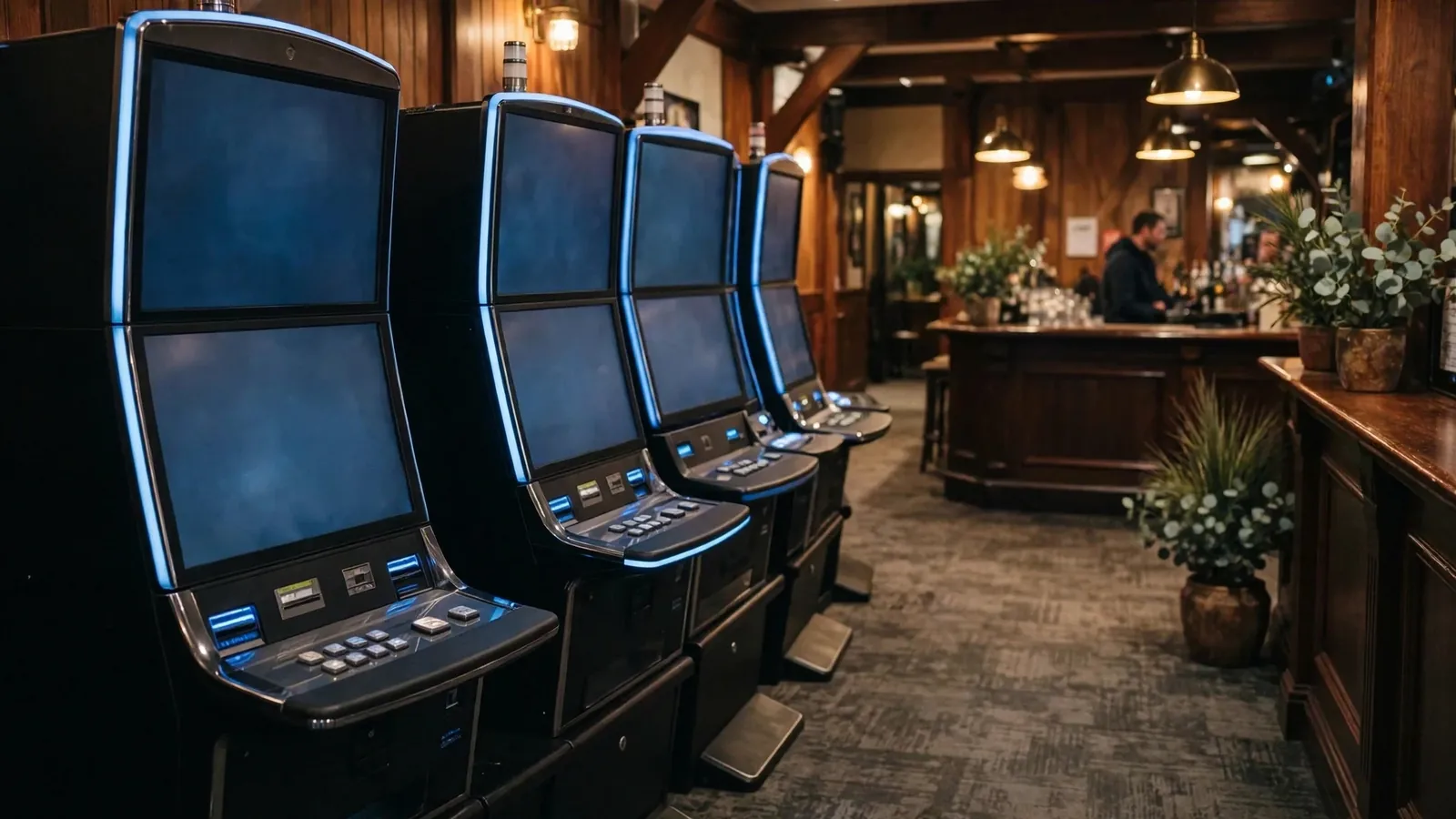
Table of content
Lightning Link is a venue-machine series, and free play, jackpot features and online availability have different limits in Australia.
Lightning Link in Australia: a Venue Game, Not an Online Casino Offer
Lightning Link belongs to the familiar world of Australian gaming venues: it is a game series made by Aristocrat and encountered on electronic machines in venues, not as a real-money online casino game for people in Australia. The distinction can blur on a screen. A game’s name may appear beside language about casinos, pokies or online play, but the setting changes the legal question. A venue machine and an internet service are not the same thing.
The Interactive Gambling Act 2001 draws a firm line around the provision of certain online gambling services to people in Australia. Online poker and casino-style games are among the prohibited services when supplied to Australian residents. The law concerns the operator providing the service; it does not make an online version of Lightning Link a lawful Australian casino offer simply because the title is familiar from a physical venue.
That separation reflects a broader Australian choice about gambling. The country has not treated online casino access as an ordinary extension of venue gaming. A machine can be part of a licensed physical setting while a service delivering casino-style games over the internet falls under a different federal prohibition. The technology is newer; the boundary is administrative and deliberate.
For Australian players looking into Lightning Link online pokies in 2026, operator details can help set expectations before choosing where to play. Use this list as a starting point, and check the current terms and game availability directly with each operator.
1. SpinsUp
License: Curacao Gaming Control Board OGL/2023/174/0082 (Dama N.V.) SpinsUp lists a Curacao Gaming Control Board licence held by Dama N.V. That licence is the main stated detail to consider when reviewing the operator.
2. LevelUp Casino
License: Curacao eGaming OGL/2023/174/0082 (Dama N.V.) · Min. deposit: A$15 LevelUp Casino lists a Curacao eGaming licence held by Dama N.V. Its minimum deposit is A$15.
3. MrPacho
Payout speed: crypto 30-120 minutes, fiat 24-72 hours · Min. deposit: A$30 MrPacho lists crypto payouts in 30–120 minutes and fiat payouts in 24–72 hours. The minimum deposit is A$30.
4. Ricky Casino
Payout speed: crypto under 1 hour, PayID 1-3 business days · Min. deposit: A$20 (A$30 to qualify for the bonus) Ricky Casino lists crypto payouts in under an hour and PayID payouts in 1–3 business days. The minimum deposit is A$20, or A$30 to qualify for the bonus.
5. SkyCrown
License: Tobique Gaming Commission · Payout speed: crypto ~10-15 minutes, fiat 1-5 days · Min. deposit: A$30 SkyCrown lists a Tobique Gaming Commission licence, with crypto payouts around 10–15 minutes and fiat payouts in 1–5 days. Its minimum deposit is A$30.
6. Kingmaker
Payout speed: crypto ~90 minutes, fiat 1-5 days · Min. deposit: A$30 Kingmaker lists crypto payouts around 90 minutes and fiat payouts in 1–5 days. The minimum deposit is A$30.
7. Neospin
License: Curacao Gaming Control Board OGL/2023/176/0095 (Hollycorn N.V.) Neospin lists a Curacao Gaming Control Board licence, OGL/2023/176/0095, held by Hollycorn N.V. The licence is the stated detail available for assessing this operator.
8. GoldenCrown
License: Curacao Gaming Control Board OGL/2023/176/0095 (Hollycorn N.V.) GoldenCrown lists a Curacao Gaming Control Board licence, OGL/2023/176/0095, held by Hollycorn N.V. The licence is the stated detail available for assessing this operator.
9. Thor Casino
License: Curacao – Antillephone N.V. (Versus Odds B.V.) · Min. deposit: EUR 20 Thor Casino lists a Curacao licence associated with Antillephone N.V. and Versus Odds B.V. Its stated minimum deposit is EUR 20.
10. Wild Tokyo
License: Curacao · Payout speed: crypto 30-60 minutes, fiat 1-5 days · Min. deposit: A$10 Wild Tokyo lists crypto payouts in 30–60 minutes and fiat payouts in 1–5 days. Its minimum deposit is A$10, and its stated licence is Curacao.
What the regulator does
The Australian Communications and Media Authority, or ACMA, is the federal regulator responsible for enforcing the Interactive Gambling Act and monitoring compliance with federal interactive gambling rules. Its role includes responding to prohibited services operating online. Where a website provides an unlawful interactive gambling service, or advertises one in Australia, ACMA can ask internet service providers to block access to it.
The scale of that enforcement is substantial. Since November 2019, ACMA has blocked more than 1,455 illegal gambling and affiliate websites after taking enforcement action. The figure includes affiliate sites as well as gambling services, reflecting a system in which promotion can be part of the route by which prohibited services reach the public.
A second measure concerns services that have left the Australian market. ACMA’s enforcement since 2017 is associated with withdrawals by more than 210 illegal services, while another published account puts the total at over 190. Those figures are not identical, so neither should be made to look like a single settled count. The direction is clear: enforcement has prompted services to withdraw as well as websites to be blocked. A quiet kind of pressure.
Blocking is not the same as erasing every trace of a service from the internet. It is a regulatory tool directed at access from Australia, and it sits alongside the law’s prohibition on operators supplying the service. The legal framework is therefore not an endorsement of overseas casino sites, nor a list of alternatives to a venue game. It is a restriction on online casino-style provision to people in the country.
Live Baccarat Online in Australia: Rules and Risks
That matters when Lightning Link is described as an online casino game. The wording may suggest that the venue title has simply been transferred to a browser or phone. Similar language does not make the two forms interchangeable.
This section is affiliate-linked and may contain sponsored recommendations. That disclosure explains the commercial context of the page; it does not change the law or turn a prohibited service into an acceptable recommendation. Any real-money gambling content is strictly for adults aged 18 and over. The age condition is a minimum, not a claim that every form of gambling is available online.
The venue machine remains the relevant setting for Lightning Link in Australia. The online boundary is set not by the game’s branding but by the nature of the service and where it is supplied. In a market that permits gambling in some places and prohibits certain forms of it in others, the distinction is more than a technicality. It is the rule.
Free Play and the Boundary Between a Game and Gambling
“Free” can describe two different things: a game that asks for no real-money stake, or a gambling service whose first session costs nothing. The distinction matters more than the label. In a social-casino game, play uses virtual currency, and that currency cannot be turned into cash or a prize. Under the Interactive Gambling Act, that absence of real-money winnings places such play outside the category of gambling.
Under the Interactive Gambling Act, social-casino play using virtual currency is not categorized as gambling because the currency cannot be turned into cash or prizes.
The word “pokies” carries a familiar promise of a certain kind of machine play, but the setting changes the meaning. A social version may borrow the look and rhythms associated with pokies while keeping the activity within a closed loop of virtual currency. The experience may resemble gambling; the outcome does not become a financial return. No cash-out waits at the end, and virtual balances are not prizes in another form.
That distinction is easy to lose in casual language. A player may say they are playing for free, while a screen presents coins, credits or a balance that rises and falls. Those symbols can make the activity feel consequential. Yet virtual currency remains part of the game’s own accounting, not money held for the player and not a claim on a real-world reward. The crucial question is not whether the display looks like a casino, but whether successful play can yield money or a prize. In the social-casino model described here, it cannot.
This is why “free Lightning Link” is best understood as a request for a version built around virtual play, rather than a promise of the same financial stakes without payment. Free play refers to the terms of participation and the kind of currency involved. It does not mean that virtual winnings can later be exchanged for cash, nor that a run of favourable results creates an entitlement to something outside the game. A score can be satisfying and still be only a score.
Live Blackjack Online in Australia: Legal Limits
There is a small social history in that separation. Gambling has long made chance legible through counters, lights and repeated gestures; digital games can borrow those conventions without importing the money at their centre. The screen keeps the theatre and removes the payout. That can make the experience more accessible as entertainment, but it also asks for a little care in reading what its symbols mean. A coin on a screen is not necessarily a coin in anyone’s pocket.
For people looking for Lightning Link online in a free format, the important boundary is therefore not a technical one. It is not simply whether a game loads on a screen or resembles a familiar machine. It is whether play involves real money and whether it can return money or prizes. Virtual-currency social casino play, where no such winnings are possible, is treated differently from real-money gambling under the IGA. The likeness of the graphics does not erase that difference.
Nor does the word “free” settle every question on its own. It is a description that needs an object: free of a real-money stake, free to access, or free of any financial consequence? The relevant point here is narrower. Virtual-currency play does not produce real-money winnings or prizes. That limit is what keeps the social game on the entertainment side of the legal line described by the Act. It is not a disguised route to cash gambling.
Do
- Understand that virtual currency is part of the game’s own accounting
- View virtual winnings as a score rather than a financial return
Don’t
- Mistake a virtual balance for funds available to withdraw
- Confuse the vocabulary of digital interfaces with real financial terms
The distinction also protects language from doing too much work. “Win” may describe collecting more virtual currency inside a game, but it should not be mistaken for winning money. “Balance” may refer to the game’s own tally, not funds available to withdraw. These words can sound like financial terms because digital interfaces often borrow the vocabulary of accounts and transactions. Their meaning depends on what the balance can actually become. In this case, it stays within the game.
A free social version can therefore offer the visual form of Lightning Link without offering real-money gambling. That may be enough for someone interested in the design or the play experience, but it is not a substitute for a cash game—and should not be presented as one. The distinction is plain, if less dramatic than the lights.
This article is affiliate-linked and may contain sponsored recommendations. Real-money gambling content is for people aged 18 and over.
Lightning Link’s Hold and Spin Rhythm
Lightning Link is a game series created by Australian developer Aristocrat. Its defining feature is not simply a set of spinning positions, but a change in pace: during Hold and Spin, some positions stop moving while others continue to spin independently. A specialist game review describes the mechanic in those terms. The result is a round that asks the eye to track two states at once—what has settled and what remains in motion.
High-Volatility Slots in Australia: How They Work
The distinction matters because “hold” and “spin” are not competing actions. They happen together. Special-symbol positions lock in place, preserving their position on the display, while the other positions continue to turn separately. The locked symbols form a visual anchor; the moving positions keep the round unresolved. It is a small piece of design with a large effect on how time feels.
Before the feature, a spin is read as a single event: the display moves, then stops. Hold and Spin breaks that rhythm into stages. Once the feature is underway, some of the display becomes still, and attention shifts to the positions that are still changing. Each can resolve on its own rather than being treated as one undifferentiated sweep. The eye follows a sequence, not just a result.
That sequence gives the mechanic its name. “Hold” describes the fixed special-symbol positions; “Spin” describes the remaining positions, which continue independently. The terms are plain, almost administrative. The experience is less so: a still area makes movement elsewhere more noticeable, and a changing position can briefly become the centre of the display. Nothing needs to move faster for the round to feel more charged. The contrast does the work.
The locked positions also give the screen a memory. In an ordinary spin, the display’s previous movement is over as soon as it stops. Here, some positions persist through the feature while other positions change around them. That persistence makes it easier to follow what is happening from one stage to the next. It is not a new board each time; it is a partial continuation, with settled symbols remaining visible as the rest of the action proceeds.
Pokies & Games: Slots and Casino Game Guides
The independent movement is important. If all remaining positions behaved as one block, the feature would still contain a pause and a restart, but it would not have the same staggered quality. Separate positions can resolve at different moments, so attention travels across the display. The design turns waiting into part of the play sequence. The machine need not explain that formally; the contrast between fixed and moving positions communicates it.
This is why Hold and Spin is often the first mechanic associated with Lightning Link. It changes the tempo without requiring a complicated rulebook: positions lock, others spin, and the display’s state develops in view. The simplicity is deliberate. A player can see the boundary between what has stopped and what remains active, even without translating the feature into technical language.
The mechanic also shows how a familiar machine format can be made to feel episodic. A regular spin is brief and self-contained; Hold and Spin extends attention across a continuing sequence. The still symbols serve as markers, while the moving positions keep the scene open. It is an unusually legible form of suspense: not a hidden process, but a visible division between settled and unsettled parts of the screen.
That description is about movement, not what a particular outcome means. The feature’s defining rhythm lies in the positions themselves: some stay put, others continue independently. No further promise is built into that observation. The machine’s choreography is clear; its result is not.
This article is affiliate-linked and may contain sponsored recommendations. Real-money gambling content is restricted to adults aged 18 and over.
Live Roulette in Australia: Dealers and Legal Limits
What the Machine’s Linked Jackpots Mean
The Major and Grand are not simply fixed amounts printed beside the reels. In a linked Lightning Link installation, they are progressive jackpots: specialist game reviews describe both figures as increasing over time as players wager on connected machines. The display gives a moving public measure of play across that network, rather than a promise attached to any single spin.
That shared structure changes the scale of the story. A machine may sit in one venue, but its linked jackpot reflects wagers made across multiple machines. The amount shown can therefore rise while individual players come and go. It belongs to a wider pool of activity, not to the person who happens to be standing in front of the cabinet when the number catches the eye.
The distinction matters because a large displayed total can feel personal. It is visible, specific and easy to imagine as a future outcome. Yet the total does not reveal how likely a particular spin is to trigger a jackpot, nor does it turn the wager into an investment in a growing balance. It records a feature of the linked game system. It does not forecast who will receive the prize.
What “linked” changes
On a standalone machine, the play is contained within that machine’s own activity. Linked machines add a shared jackpot layer: as wagers are made on the connected games, the Major and Grand can climb. That is the relevant meaning of the word “linked” in a Lightning Link jackpot description.
The arrangement also explains why the displayed amount may differ from one moment to another. It is not a static figure, and it is not necessarily tied to the recent history of one cabinet. A player watching a Lightning Link machine in Australia is seeing a jackpot associated with a network of play, not a private pot created by that machine alone.
Linked jackpots reflect wagers made across multiple connected machines, meaning the displayed total rises based on collective network activity rather than a single machine’s play.
There is a quiet social quality to this design. Many separate decisions to wager feed a figure that appears as one conspicuous prize. The machine compresses that collective activity into a bright number, while leaving the individual odds out of view. A number can be vivid without being informative.
The maximum-bet condition
A specialist game review also notes that eligibility for a jackpot may depend on staking the maximum bet. The word “may” matters: the condition is not a universal rule to assume across every machine or variant. The game’s displayed rules determine what applies to that particular setup.
This is a condition of eligibility, not a method for making a jackpot more likely in any guaranteed sense. Choosing the maximum stake cannot secure a win; it can only satisfy a stated requirement where that requirement applies. The difference between qualifying to take part in a jackpot and being likely to receive it is substantial, even if the interface gives both ideas equal visual weight.
For anyone examining a Lightning Link machine’s jackpot rules, the useful detail is therefore not just the amount shown. It is whether the machine’s own information states a maximum-bet requirement and what that requirement covers. A headline figure without its eligibility terms is an incomplete description.
The Major and Grand can grow as linked machines attract wagers, but that growth is collective and uncertain from the perspective of any one player. A jackpot total is a record of the system’s movement, not evidence that a particular spin is due. The display tells one part of the story. The rules tell another.
Plinko casino Australia: access, play and payouts
Real-Money Play and the Limits of Online Availability
Lightning Link is not available for real-money online play to people in Australia. It is an Aristocrat game series found on machines in Australian venues; a website describing an online version does not change that distinction. The words “real money” may appear beside a familiar game name, but the legal character of the service depends on how it is provided, not on the label attached to a page.
Under the Interactive Gambling Act 2001, operators may not provide online casino-style gambling to people in Australia. That category includes real-money pokies. The law is directed at those supplying the prohibited service, rather than at individual players. There are no known cases of Australian players being prosecuted for gambling through offshore sites, but that does not make online casino services lawful to provide here or turn an online offer into an authorised Australian version of Lightning Link.
The distinction is easy to blur because the machine experience has a recognisable vocabulary: a stake is placed, reels spin, and a result appears. Yet venue play and an online casino service are not interchangeable simply because both use screens and familiar game imagery. In Australia, Lightning Link’s real-money form belongs to the venue floor. Searching for an online version does not reveal a legal route to play the same game for cash from home.
Legal Restriction
Under the Interactive Gambling Act 2001, it is prohibited for operators to provide online casino-style gambling services, including real-money pokies, to people in Australia.
This also matters when a page calls itself a demo or presents a game-like interface. A title or visual resemblance alone cannot establish that it is the Aristocrat venue game, nor that it offers a lawful real-money version. Virtual-currency play is a separate subject; it does not turn into cash gambling merely because the interface resembles a pokies machine. That boundary deserves its own treatment, rather than being folded into claims about real-money access.
Nor does a strategy alter the legal status or the underlying uncertainty of a game. Advice about timing, bet selection or patterns cannot make an online service permissible, and it cannot guarantee a result. A machine’s rules describe how a play proceeds; they do not grant the same game a different legal setting when it appears on a website. There is no shortcut hidden in the phrase “online real money.”
The arrangement reflects a regulatory choice: the Australian framework places responsibility on providers, while the player is not the enforcement target described by the law. That is not an endorsement of offshore play, and it is not a promise that a website will remain reachable or reliable. The legal and practical limits are distinct, but neither creates an online Australian Lightning Link product.
This article contains affiliate links and may include sponsored recommendations. It does not recommend online casino services. Real-money gambling content is for adults aged 18 and over; that age condition does not override the restrictions on online casino services in Australia.
A familiar name, a different service.
Apps, Phones and the Limits of Platform Access
A phone makes a game feel portable; it does not change where that game was designed to be played. Lightning Link was made for land-based venues. That matters when a familiar title appears beside mobile games using a similar feature: resemblance in play does not make them the same product.
A specialist review describes online platforms as offering Hold and Spin games from Aristocrat and other developers. The shared mechanic may invite comparison, but it is not evidence that Lightning Link itself has an official app or a real-money mobile version for Australia. A game catalogue can look like a family portrait in which several people have borrowed the same expression.
Bonus Buy Slots in Australia: Legal Guide
The distinction is useful when assessing an app bearing a familiar name or theme. Mobile access alone says little about the game’s identity, its developer or whether it is the venue title. Nor does a similar feature establish a connection to Lightning Link. The game was designed around physical venue machines; a phone presentation belongs to a different access setting, even when some of the play language feels familiar.
The same care applies to Happy Lantern, a named Lightning Link variant. Seeing its title associated with a mobile game does not, by itself, establish that the venue version has been released as an app. Names can travel more easily than products.
“Tips” are often presented as if a phone interface might reveal a shortcut. It cannot make a mobile lookalike identical to the venue game, and similarity of mechanics is not proof of a special method for play. The more useful distinction is modest: identify whether the subject is the land-based Lightning Link series or another game borrowing a comparable Hold and Spin idea. No trick required.
This page is affiliate-linked and may contain sponsored recommendations. That disclosure does not alter the distinction between a venue game and a mobile title with related mechanics. Real-money gambling content is for adults aged 18 and over. A small screen changes the setting. It does not settle the identity of the game.
Jackpot Eligibility Is Not a Winning System
A maximum-bet condition is sometimes described as part of jackpot eligibility for Lightning Link. A specialist review reports that a player may need to wager at the machine’s maximum stake to qualify. That is a condition to check on the particular machine, not a way to make a jackpot arrive.
The distinction matters. Eligibility defines whether a play can be considered for a prize under the machine’s rules; it does not predict the result of that play. A larger stake cannot turn chance into a dependable system, and no pattern of previous outcomes establishes what the next spin will do. The word “maximum” sounds like a lever. It is only a setting.
Low Volatility Slots in Australia: How They Work
Claims about how to win on Lightning Link pokies often blur these two ideas. Meeting a stated condition may be necessary for eligibility, but it is not sufficient to secure a win. Nor does a strategy based on timing, repeated spins or changing the stake alter that basic limit. The machine’s rules govern participation; they do not offer a route around uncertainty.
The precise condition can depend on the machine’s displayed rules and the venue’s setup. The reported maximum-bet requirement should therefore be treated as a possible rule, not a universal promise applying to every Lightning Link machine. Before play, the machine’s own information is the relevant place to establish what qualifies. If the maximum stake is beyond a person’s budget, skipping the jackpot possibility is safer than treating a higher wager as an investment in certainty.
That is the less theatrical answer to “how to win”: eligibility may be conditional, while winning remains uncertain. There is no stake or method that guarantees the outcome.
This content is affiliate-linked and may contain sponsored recommendations. Real-money gambling content is for people aged 18 and over.
Bet Sizes on Venue Machines
A stake on a Lightning Link venue machine is shown as an amount for each spin, but there is no single minimum that applies everywhere. A specialist review reports minimum bets ranging from $0.20 to $1.00 per spin, with the setting depending on the casino and the game variant. That is a reported range, not a fixed national tariff: the amount displayed on a particular machine is the relevant figure for that machine.
The difference matters because a game’s name does not determine its price. A venue may have more than one Lightning Link variant, and the available bet settings can differ between them. Even machines bearing the same title need not offer an identical starting stake at every location. The practical detail is local, printed on the machine’s own controls rather than settled by a general description of Lightning Link.
Attention: Minimum bet ranges (typically $0.20 to $1.00) vary by venue and game variant; always check the specific machine’s controls for the actual stake.
A minimum stake is only the entry point among the settings offered; it does not describe what a session will cost. Each spin uses the selected amount, so a higher setting changes the amount committed on each turn. The figure should be read as a per-spin stake, not as a guarantee of a particular result or a measure of how long play will last.
Searches for an online version can blur that distinction. These figures concern venue machines; they should not be treated as online bet guidance or as evidence that the same game is available for online real-money play in Australia. The setting belongs to the machine in front of the player.
This content is affiliate-linked and may contain sponsored recommendations. Real-money gambling content is for people aged 18 and over. A small setting is still a stake.
Downloads and What Can Actually Be Verified
A request for a Lightning Link download can point to several different things: a mobile game with a similar name, an imitation using familiar imagery, or the Aristocrat game found on venue machines. Those are not interchangeable. A file carrying the name does not, by itself, establish that it is the venue game.
What can be confirmed is narrower. Lightning Link is a game series created by Australian developer Aristocrat and designed for land-based venues. That identifies its origins and setting; it does not verify an official Australian download or app. Nor does a download label demonstrate that a game is authorised by Aristocrat. The distinction matters because a lookalike may borrow a title or style without being the same product.
The phrase “Lightning Dollar Link” can likewise appear as a variation in how the game is described, but a similar name is not proof of an official downloadable release. Without clear confirmation of the publisher and product, claims of authenticity should be treated cautiously. A familiar screen is not a provenance record.
Mines casino game in Australia: rules and checks
Downloads may also blur the line between a social game and gambling. A virtual-currency game is not a way to obtain cash or prizes. Meanwhile, an app claiming to provide real-money online pokies would not make that service lawful in Australia. The downloadable form changes the device, not the legal character of the service.
This page is affiliate-linked and may contain sponsored recommendations; that disclosure does not endorse any download. Real-money gambling content is restricted to adults aged 18 and over. For Lightning Link in Australia, the verifiable reference point remains the venue game—not an assumed app.
How the Lightning Link Variants Differ
A specialist review identifies Happy Lantern, Magic Pearl, Sahara Gold and High Stakes among the commonly encountered Lightning Link variants. The names mark different versions of the Aristocrat game, not a ranking: each has its own paytable and bonus features. Those differences matter more than the decorative theme when comparing what appears on a venue machine.
A paytable sets out how symbol combinations correspond to awards; bonus features shape the additional play a version may offer. Neither label alone tells the whole story. Two games can share the Lightning Link name while presenting different combinations of features and payouts, so the details belong to the individual variant rather than to the series as a single fixed package.
The names also hint at how the versions are given distinct identities. Lanterns, pearls, desert imagery and high-stakes language provide different visual frames for a familiar product line. That is a matter of presentation, not evidence that one version is more favourable or more likely to produce an award. No ranking follows from the names.
Lightning Link is a venue game, and the variants named here are not an online offer for Australian players. Their differences are best understood as variations in paytables and bonus design, rather than as a reason to treat one title as a recommendation.
This affiliate-linked content may contain sponsored recommendations. Real-money gambling content is restricted to people aged 18 or older.
Can I play Lightning Link for free online?
Yes, social-casino versions may offer Lightning Link-style play using virtual currency. It cannot be exchanged for cash or prizes.
What is the minimum bet for Lightning Link online pokies?
Lightning Link is not offered for real-money online play to Australian players. The stated minimums for online versions are typically $0.20 to $1.00 per spin, depending on the casino and variant.
Is it legal to play online pokies in Australia?
The Interactive Gambling Act prohibits operators from providing Australian residents with certain online gambling services, including casino-style games. The law targets operators rather than individual players, and there are no known cases of Australian players being prosecuted for gambling on offshore sites.